
Related Products
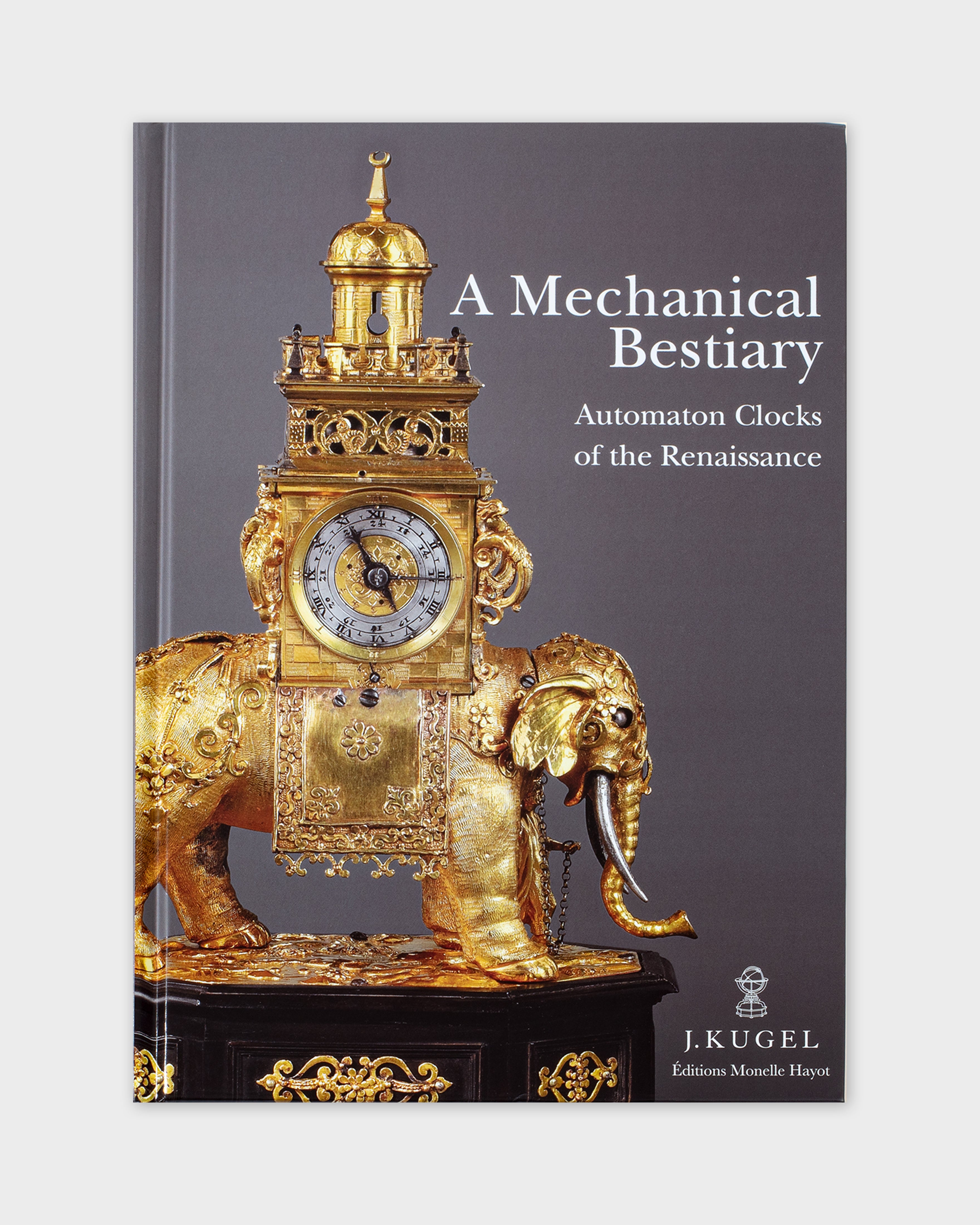
Sudpsuez A Mechanical Bestiary: Automaton Clocks from the Renaissance by Alexis Kugel
Words by Alexis Kugel
This exhibition, Galerie Kugel’s tenth, continues the tradition of seeking out little-known but fascinating fields in the art world. Renaissance automaton clocks have never been the subject of scientific study, authors of horological reference works devoting at best merely a chapter to them.
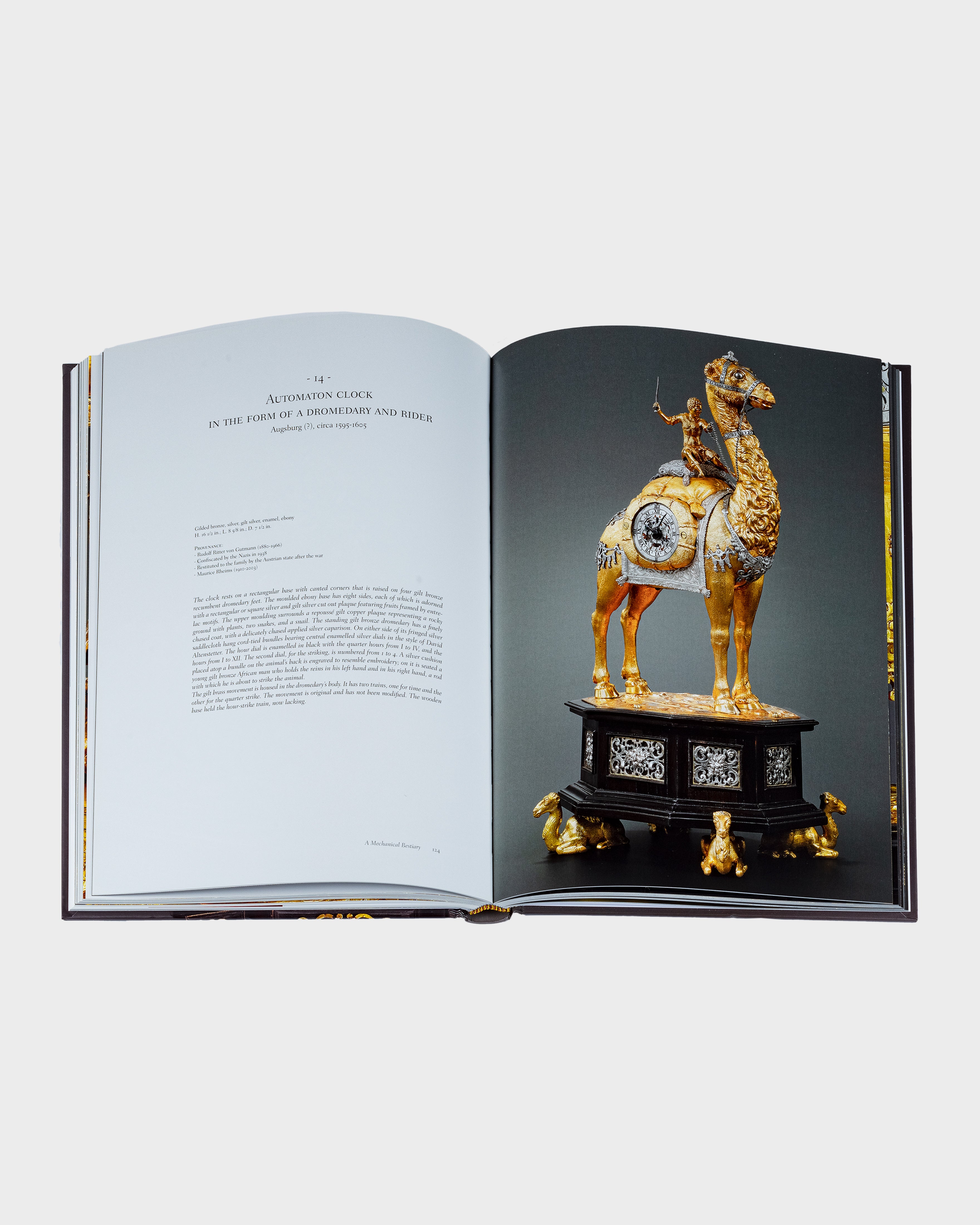
These automaton clocks date from 1580 to 1630 and were for the most part created in Augsburg, the main German artistic centre of the time. These wonderful objects combine the arts of sculpture and horology. Rivalling in fantasy and ingenuity, they fascinated the European courts. Today, they can be found in museums holding great princely collections in Vienna, Dresden, Munich. Automaton clocks were also used as diplomatic presents.
The thirty-one automaton clocks presented in this exhibition and book are the largest group ever displayed. While studying them we have made surprising discoveries. For example, the troubling similarities between some of the most extraordinary anonymous clocks displayed here: the Elephant (cat. 3), the large Pacing Lion and his Tamer (cat. 7), the large Seated Lion (cat. 9), and the Chariot of Bacchus (cat. 11), which strongly argue for their having been produced in the same workshop. Among all the clocks published in this book, only one comes from Nuremberg (cat. 21). The chronological presentation that we chose also led us to rethink the conventional dating of certain pieces.
The title “Mechanical Bestiary” is somewhat restrictive, for among the clocks presented here, a quarter represent human figures without animals, and certain pieces possess no mechanical movements. Yet the thirty-one pieces assembled here clearly form a homogeneous and coherent whole. All were created for the same reason: to amuse and delight the collectors of their time.
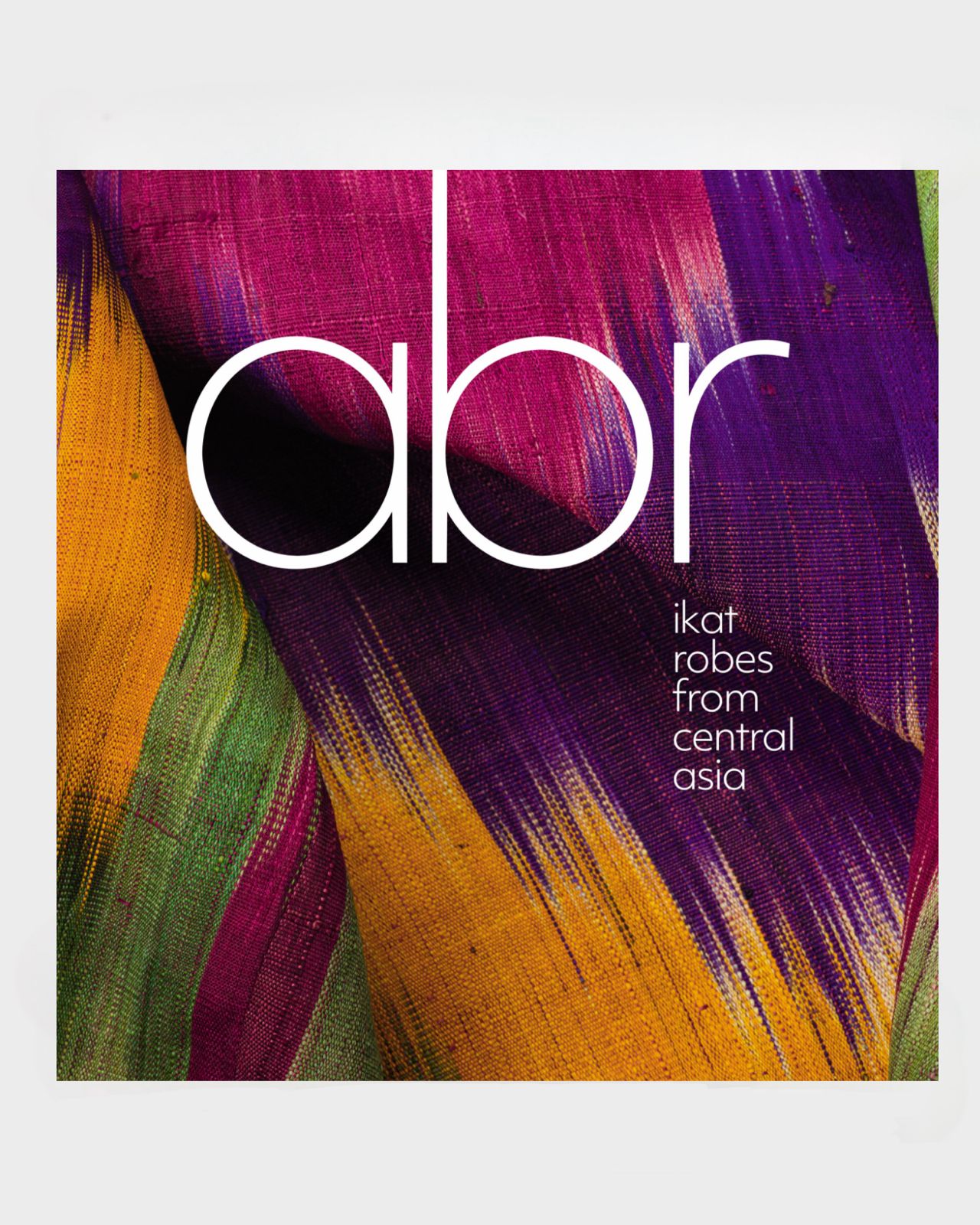
Sudpsuez Abr, Ikat Robes from Central Asia
Words by Elena Tsareva
Ikat textiles, known as abr in their lands of origin in Central Asia, are beloved by collectors, decorators and textile devotees across the world. This book presents a new approach to the intricately patterned silk textiles by focusing on complete robes from a major private collection. These items of clothing tell stories about their wearers: their home, identity and place in society. By studying the history, making, and changing fashions of ikat robes, the past is brought to life. It quickly becomes clear that the power and influence of Central Asian costume reached far beyond the borders of modern Uzbekistan, inspiring imitations and providing visual stimuli for avant-garde artists.
With stunning photography and previously unpublished research findings, this publication is a new take on ikat costume for those interested in the history of textiles and fashion, but also for those wishing to admire the sheer beauty and exquisite craftsmanship of these remarkable textiles.
Published by Hali Publications Ltd
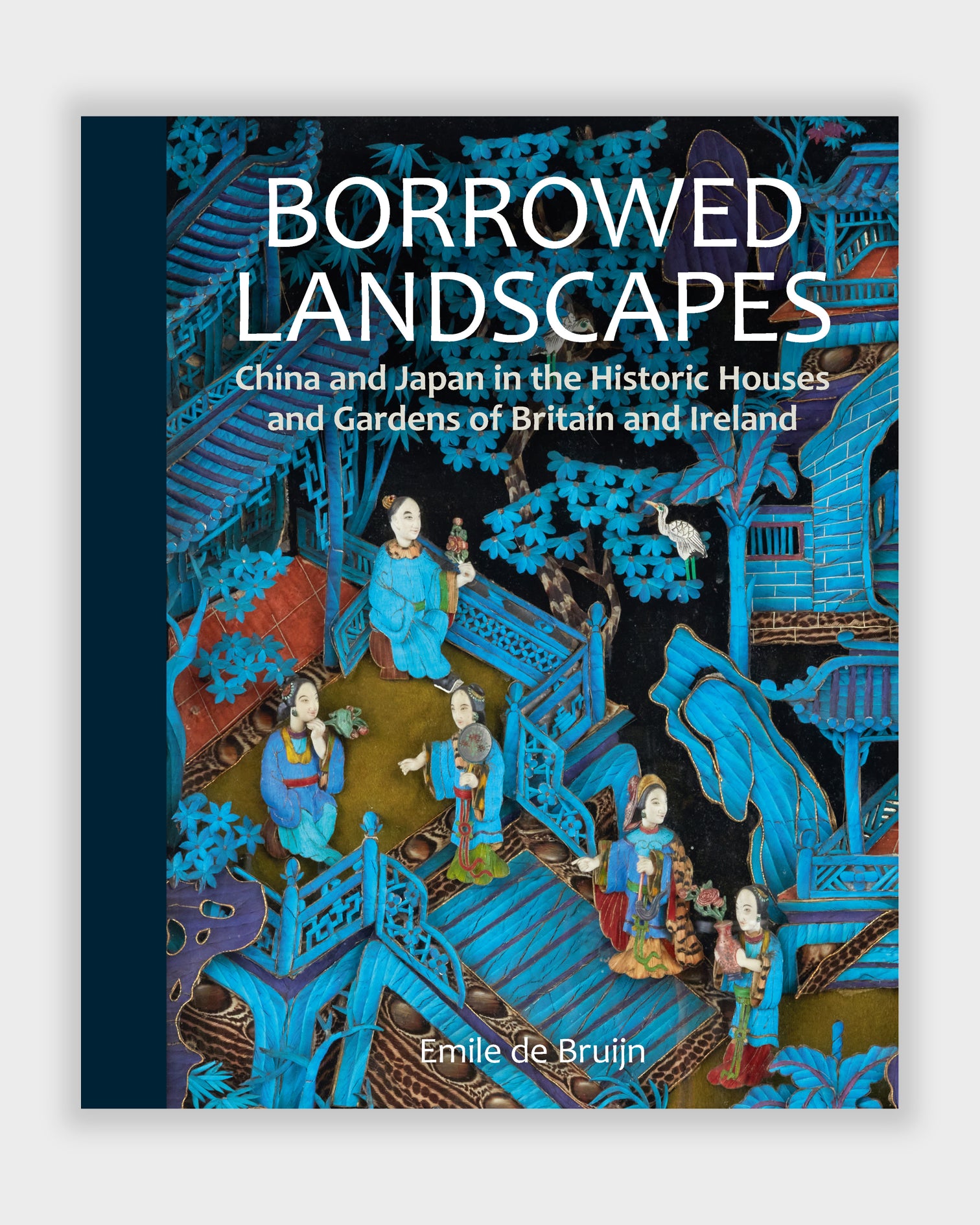
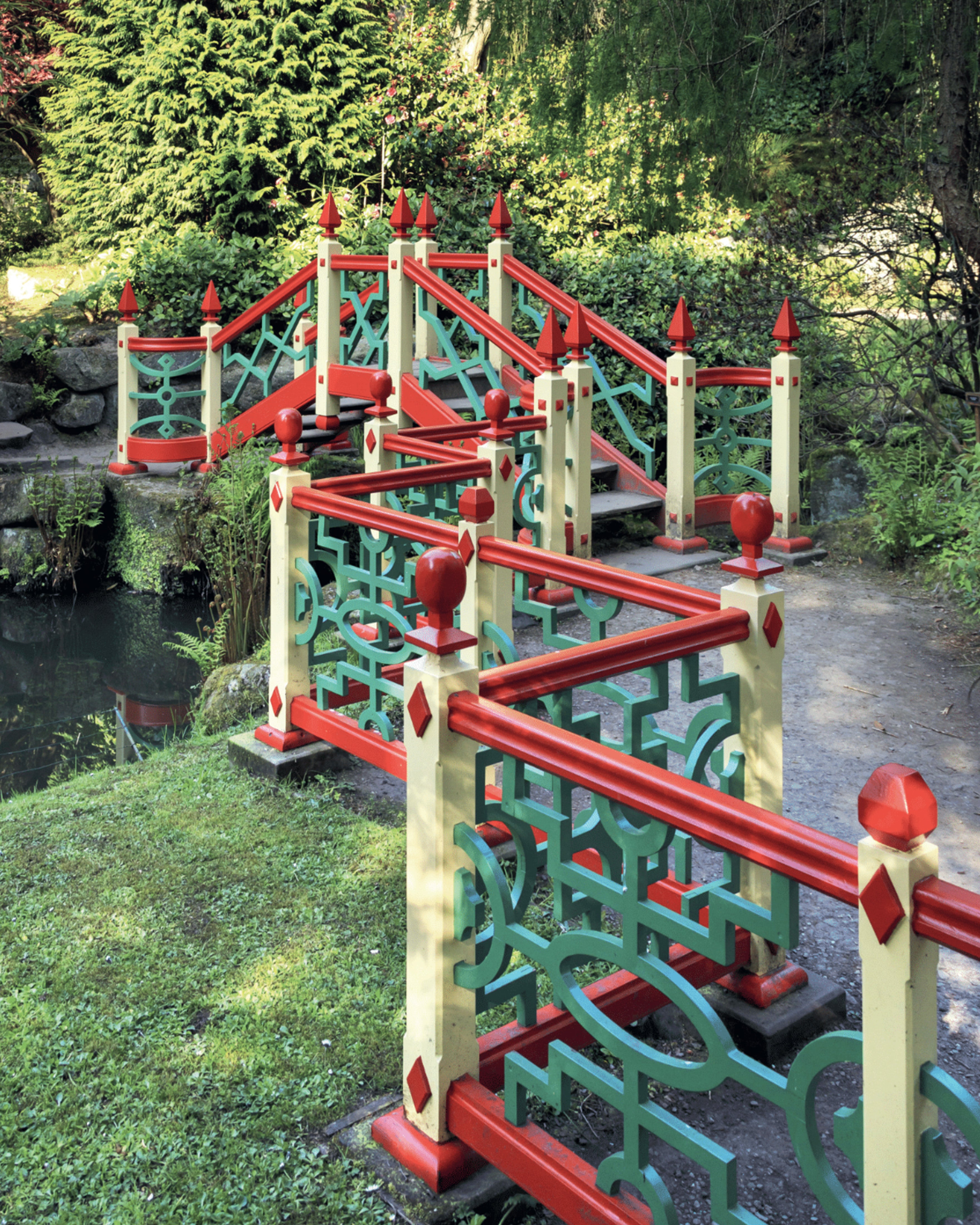
Sudpsuez Borrowed Landscapes: China and Japan in the Historic Houses and Gardens of Britain and Ireland Emile de Bruijn
Words by Wydanie: Angielski
A beautifully illustrated exploration of the impact of Chinese and Japanese material culture on the historic houses and gardens of Britain and Ireland.
The art and ornament of China and Japan have had a deep impact in the British Isles. From the seventeenth century onwards, the design and decoration of interiors and gardens in Britain and Ireland was profoundly influenced by the importation of Chinese and Japanese luxury goods, while domestic designers and artisans created their own fanciful interpretations of 'oriental' art. Those hybrid styles and tastes have traditionally been known as chinoiserie and japonisme, but they can also be seen as elements of the wider and still very relevant phenomenon of orientalism, or the way the West sees the East.
Illustrated with a wealth of new photography and published in association with the National Trust, Borrowed Landscapes is an engaging survey of orientalism in the Trust's historic houses and gardens across England, Wales and Northern Ireland. Drawing on new research, Emile de Bruijn demonstrates how elements of Chinese and Japanese culture were simultaneously desired and misunderstood, dismembered and treasured, idealised and caricatured.
Published by Philip Wilson Publishers
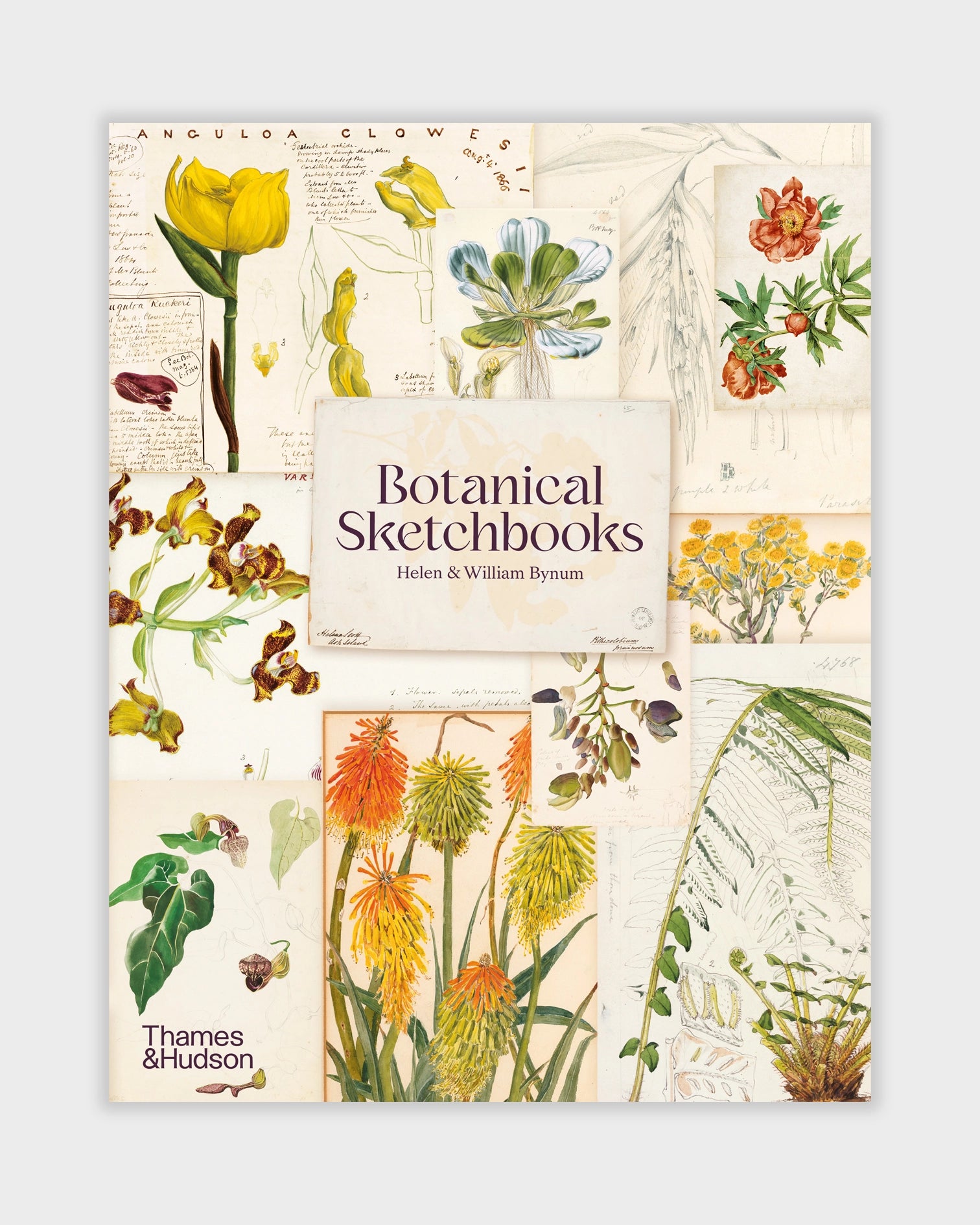
Sudpsuez Botanical Sketchbooks
Words by Helen Bynum
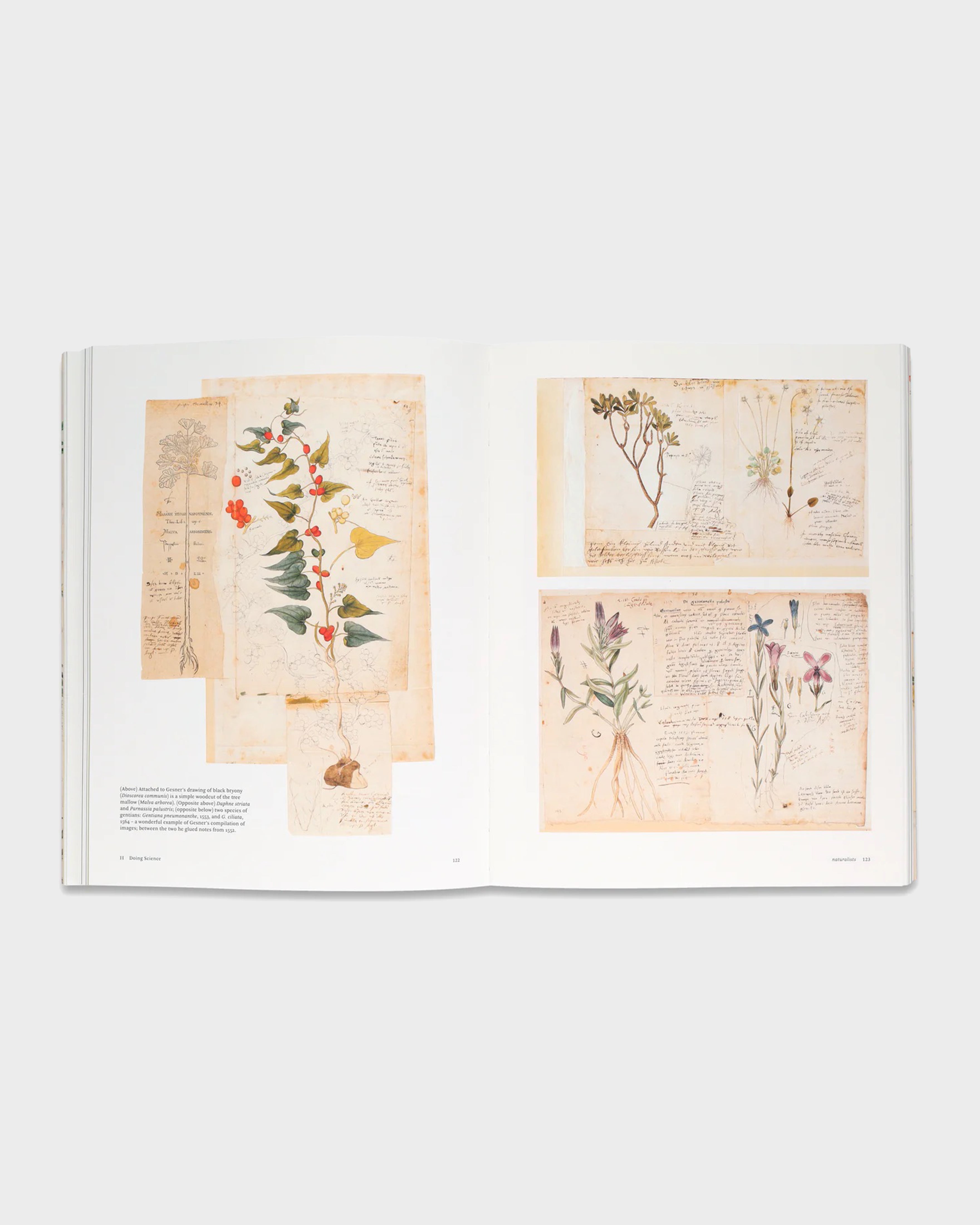
While highly finished drawings and paintings frequently feature in histories of botanical art, the preparatory sketches, first impressions and creative thoughts on paper behind them are rarely seen and have often remained hidden and locked away.
Botanical Sketchbooks brings these personal and vividly spontaneous records gloriously back into the light. In a series of biographical portraits organized thematically into four sections, the book illuminates a range of intriguing characters, from many different countries and cultures, including Germany, France, Italy, America, Australia, Japan and China. Sketchbooks proper are joined by notebooks, journals, albums, loose pieces of paper, works on vellum, manuscripts, letters, herbarium sheets and marginalia – even one drawing on the back of an envelope.
Turning the pages of this book will be an invitation to relive extraordinary experiences, imagine lost worlds, and be immersed in the endeavours, observations and motivations of the makers of such beautiful and enchanting art.
Published by Thames & Hudson Ltd
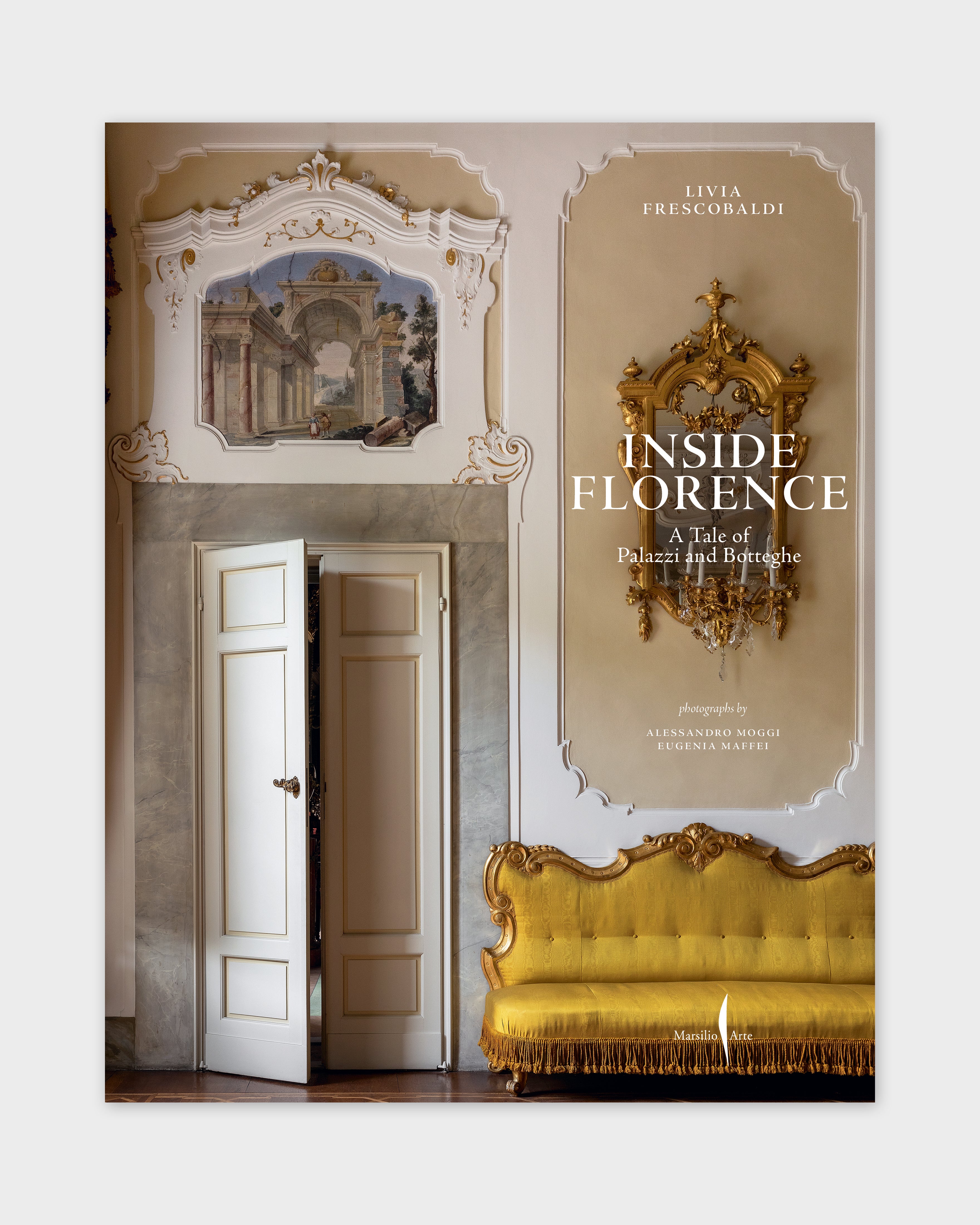
Sudpsuez Inside Florence, A Tale of Palazzi and Botteghe
Words by Livia Frescobaldi
Photographs by Alessandro Moggi, Eugenia Maffei
The home “is the place of return,” it is where “memory is”. I agree fully with Emanuele Coccia in his consideration that the setting of our private lives, the one that is most intimate and most familiar to us, is an expression of culture like a work of art or a monument of which we study the origins, the provenance and the material, craving to know and understand everything. -Livia Frescobaldi
Inside Florence, published by Marsilio Arte, offers an original account of Florence stemming from a love for the preservation of its places and the desire to offer an intimate and fresh look at the beauty and age-old skills of the city’s artisan workshops, which make the Tuscan capital one of the most admired cities in the world.
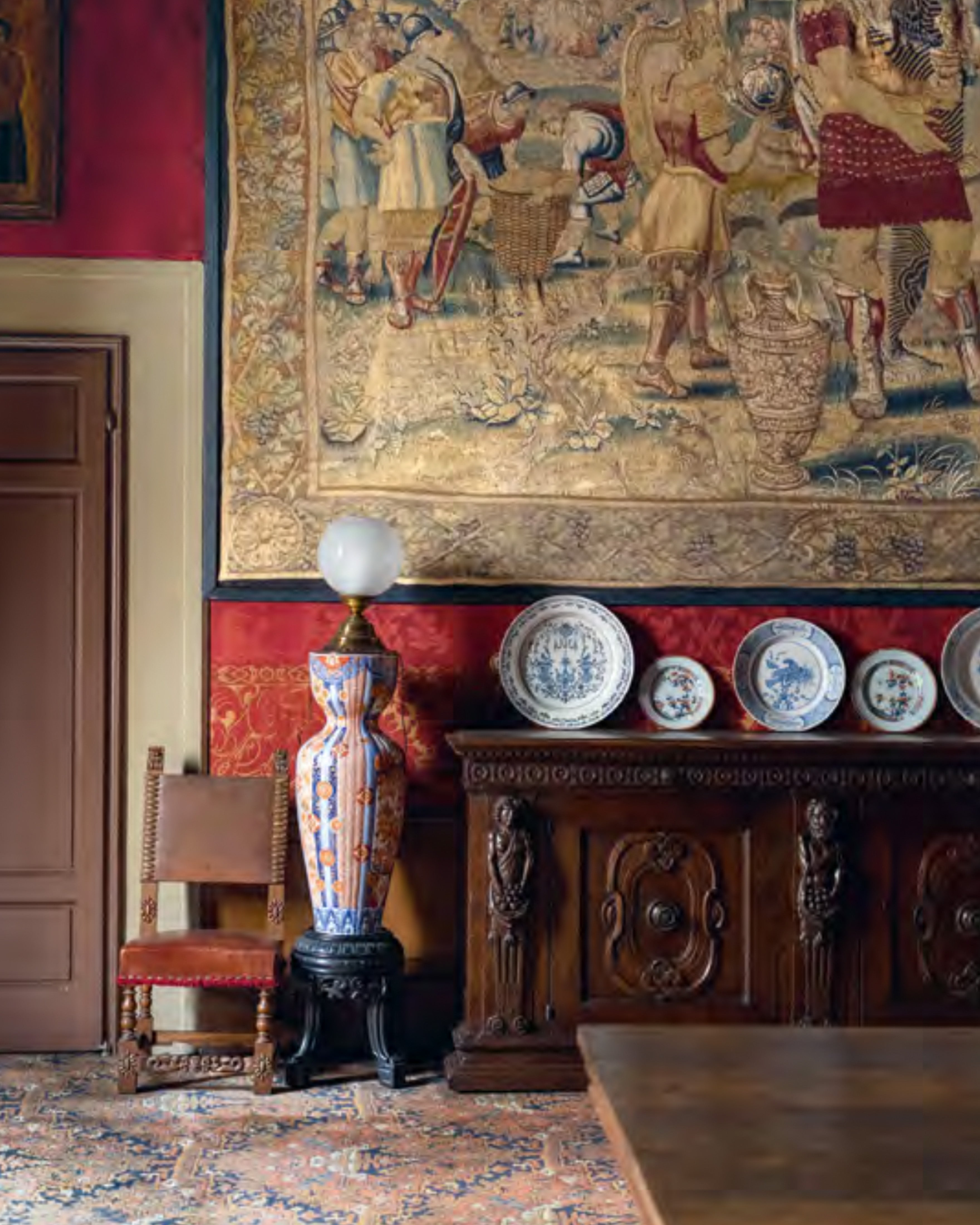
The splendid views, the meticulous details of the furnishings, the framing of the images, the care and attention in narrating and describing the opulence and refinement of the Florentine residences, are just some of the elements that author Livia Frescobaldi has selected to trace out an itinerary revealing her favourite places.
Through the photography of Alessandro Moggi and Eugenia Maffei, the book appears almost like a fresco with infinite scenarios, the protagonists of which are the heirs of a thousand-year-old history, in a difficult balance between modernity and tradition. There are sixteen sections for sixteen residences – ranging from palaces and gardens to former monasteries – each linked to a specific form of craftsmanship: the first pairing described is that between Palazzo Frescobaldi and the Antico Setificio Fiorentino, with a union rendered indissoluble by the customised Frescobaldi fabric, which has been in production since time immemorial. Inside Florence does not merely hold up a mirror to Florence’s architectural and artistic wealth, but is also an act of love towards those professional artisans who, as Leonardo Ferragamo states in his introductory text, ‘continue to create the history of the future with their ingenious, persevering and dedicated passion’.
Enriched and enhanced by the introductions of Eugenio Giani, President of the Region of Tuscany, and Bernabò Bocca, President of the Fondazione CR Firenze, the books stresses the uniqueness and historic nature of the city of Florence, that jealously guards its art professions and artisan workshops, its well-known palaces and more hidden ones, its gardens and spaces dedicated to contemporary times. The itinerary proposed in its pages has been planned for those who want to live Florence, rather than just visit it.
Published by Marsilio Arte