
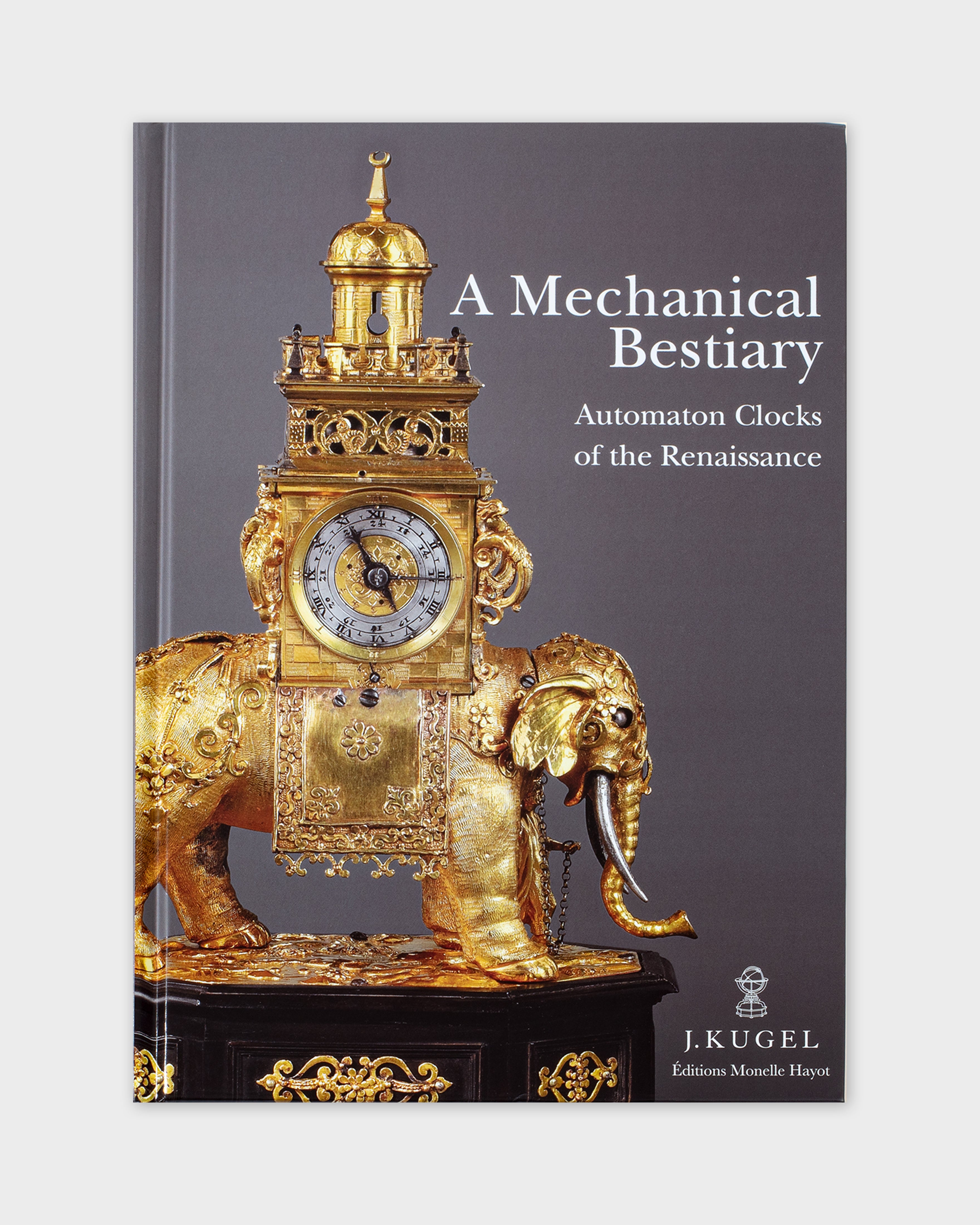
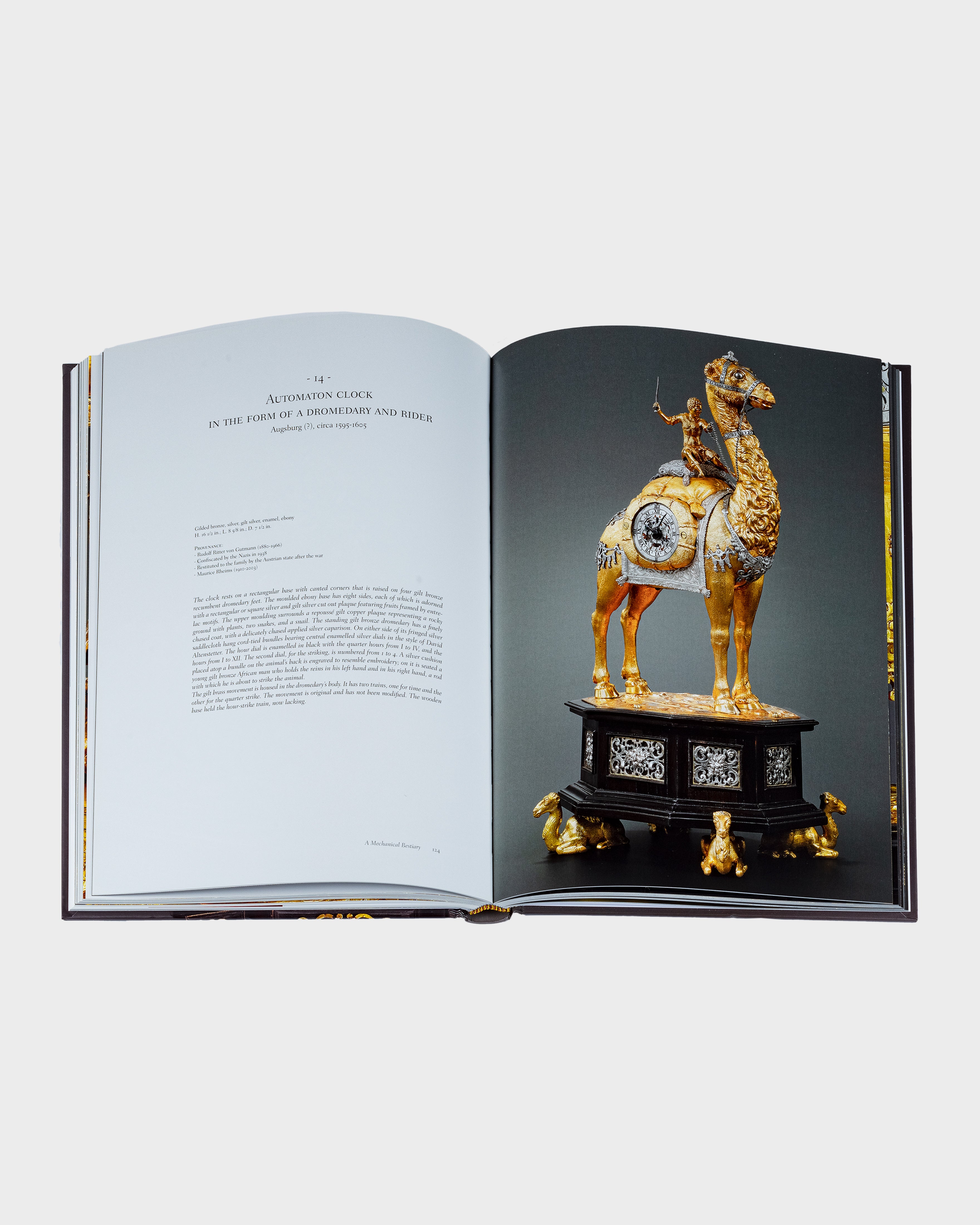
Sudpsuez A Mechanical Bestiary: Automaton Clocks from the Renaissance by Alexis Kugel
Words by Alexis Kugel
This exhibition, Galerie Kugel’s tenth, continues the tradition of seeking out little-known but fascinating fields in the art world. Renaissance automaton clocks have never been the subject of scientific study, authors of horological reference works devoting at best merely a chapter to them.
These automaton clocks date from 1580 to 1630 and were for the most part created in Augsburg, the main German artistic centre of the time. These wonderful objects combine the arts of sculpture and horology. Rivalling in fantasy and ingenuity, they fascinated the European courts. Today, they can be found in museums holding great princely collections in Vienna, Dresden, Munich. Automaton clocks were also used as diplomatic presents.
The thirty-one automaton clocks presented in this exhibition and book are the largest group ever displayed. While studying them we have made surprising discoveries. For example, the troubling similarities between some of the most extraordinary anonymous clocks displayed here: the Elephant (cat. 3), the large Pacing Lion and his Tamer (cat. 7), the large Seated Lion (cat. 9), and the Chariot of Bacchus (cat. 11), which strongly argue for their having been produced in the same workshop. Among all the clocks published in this book, only one comes from Nuremberg (cat. 21). The chronological presentation that we chose also led us to rethink the conventional dating of certain pieces.
The title “Mechanical Bestiary” is somewhat restrictive, for among the clocks presented here, a quarter represent human figures without animals, and certain pieces possess no mechanical movements. Yet the thirty-one pieces assembled here clearly form a homogeneous and coherent whole. All were created for the same reason: to amuse and delight the collectors of their time.
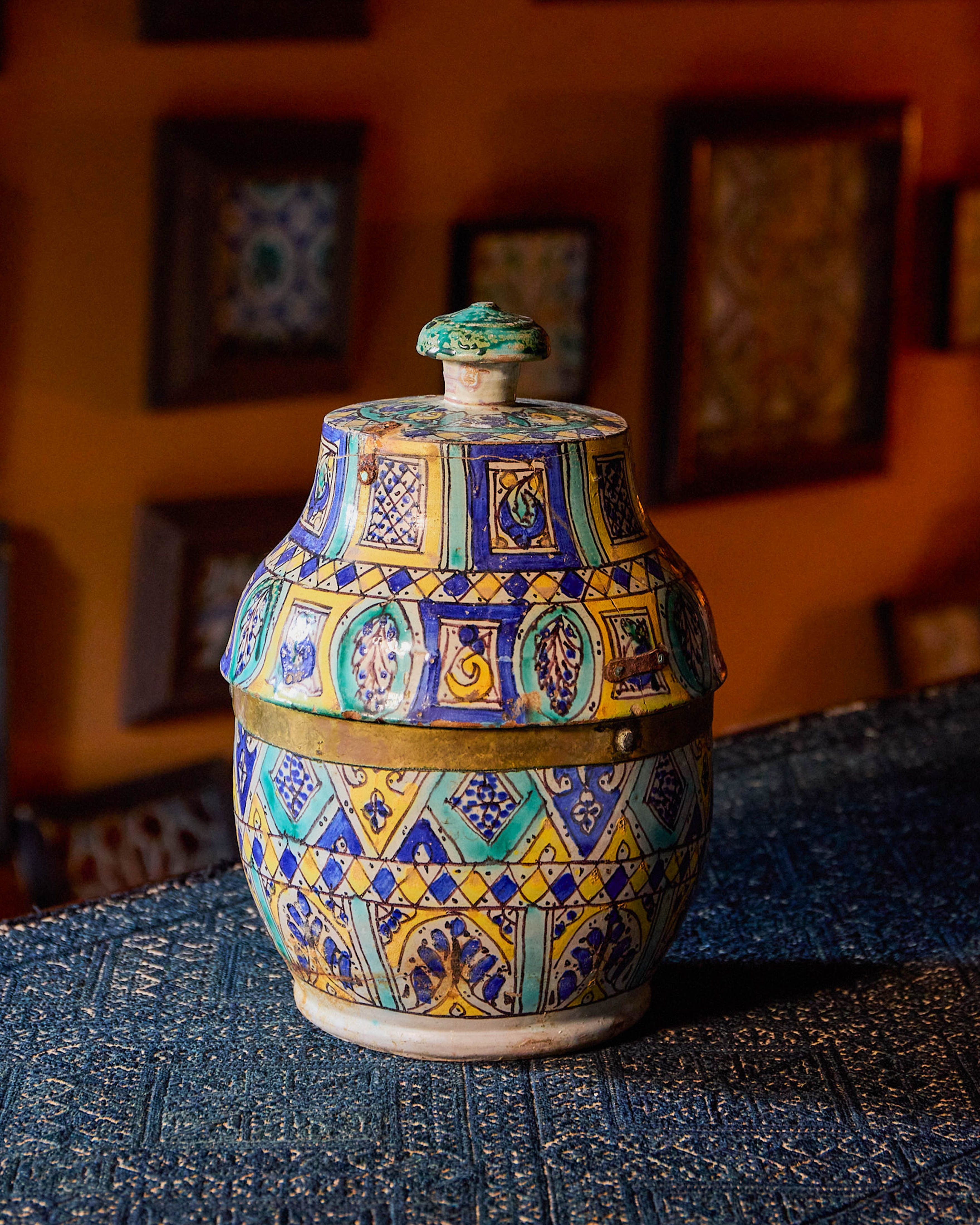
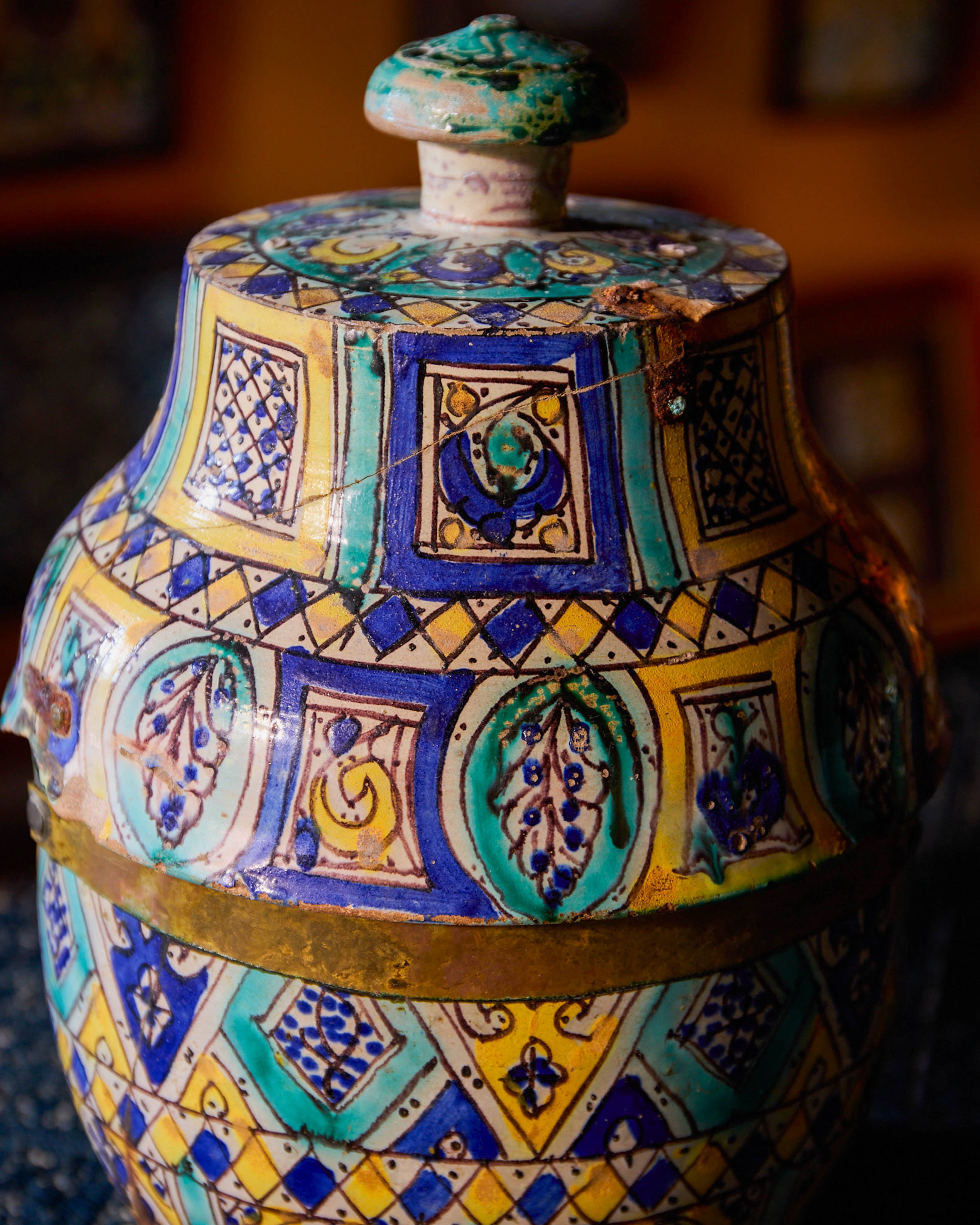
Sudpsuez A Polychrome Jobbana Pot With Lid Morocco, 19th Century
A finely decorated 19th-century Moroccan Jobbana pot, traditionally used for storing butter or dairy products. Adorned with intricate polychrome motifs in deep blues, yellows, and reds, this piece exemplifies the rich ceramic heritage of Fez, known for its distinctive hand-painted earthenware. The symmetrical patterns and vibrant glazes reflect centuries-old Islamic and Berber influences. Despite a slight crack, the pot remains in excellent condition, preserving both its functional integrity and decorative appeal. A rare and evocative piece of Moroccan craftsmanship.
Wear and tear commiserate with the age of the item.
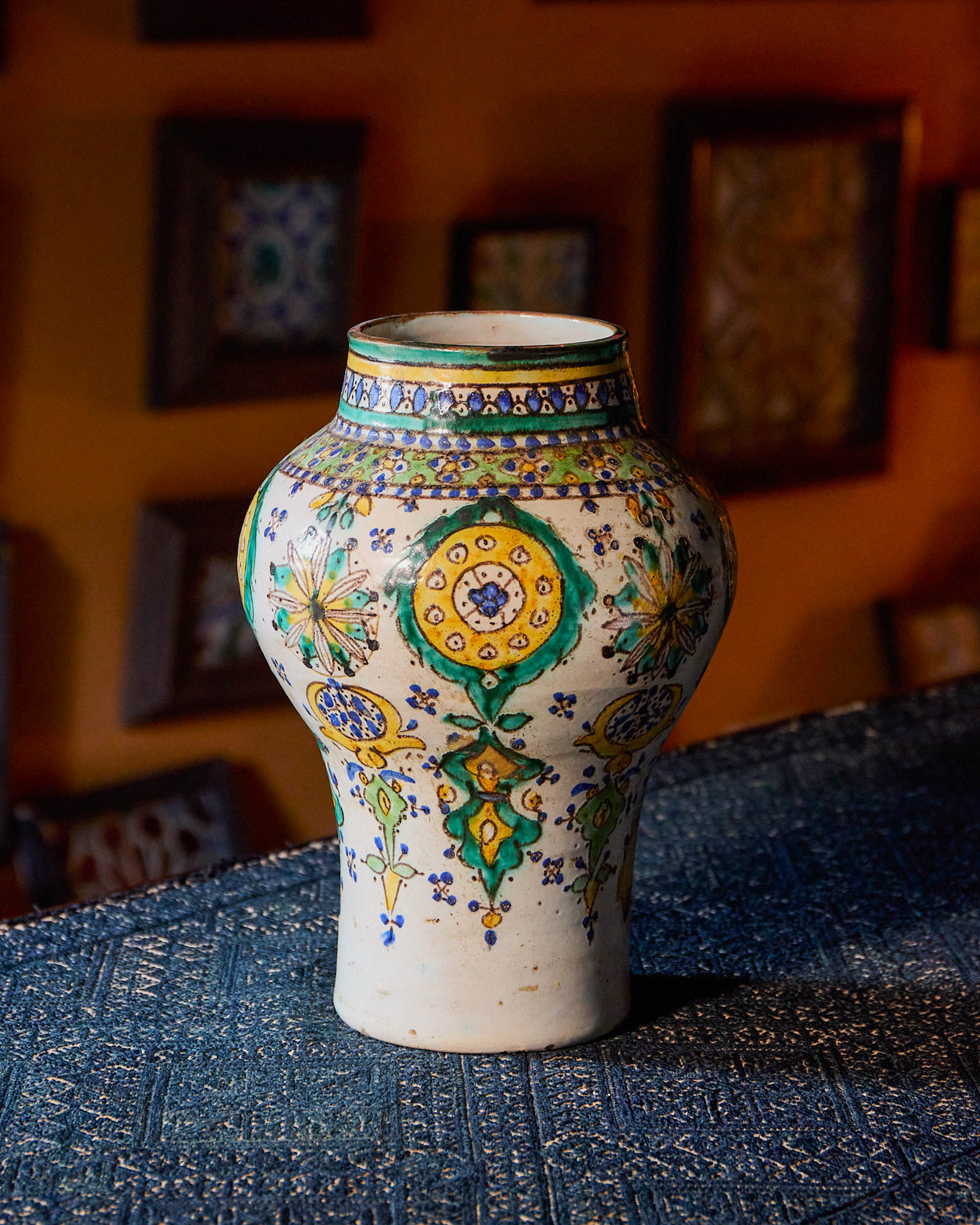
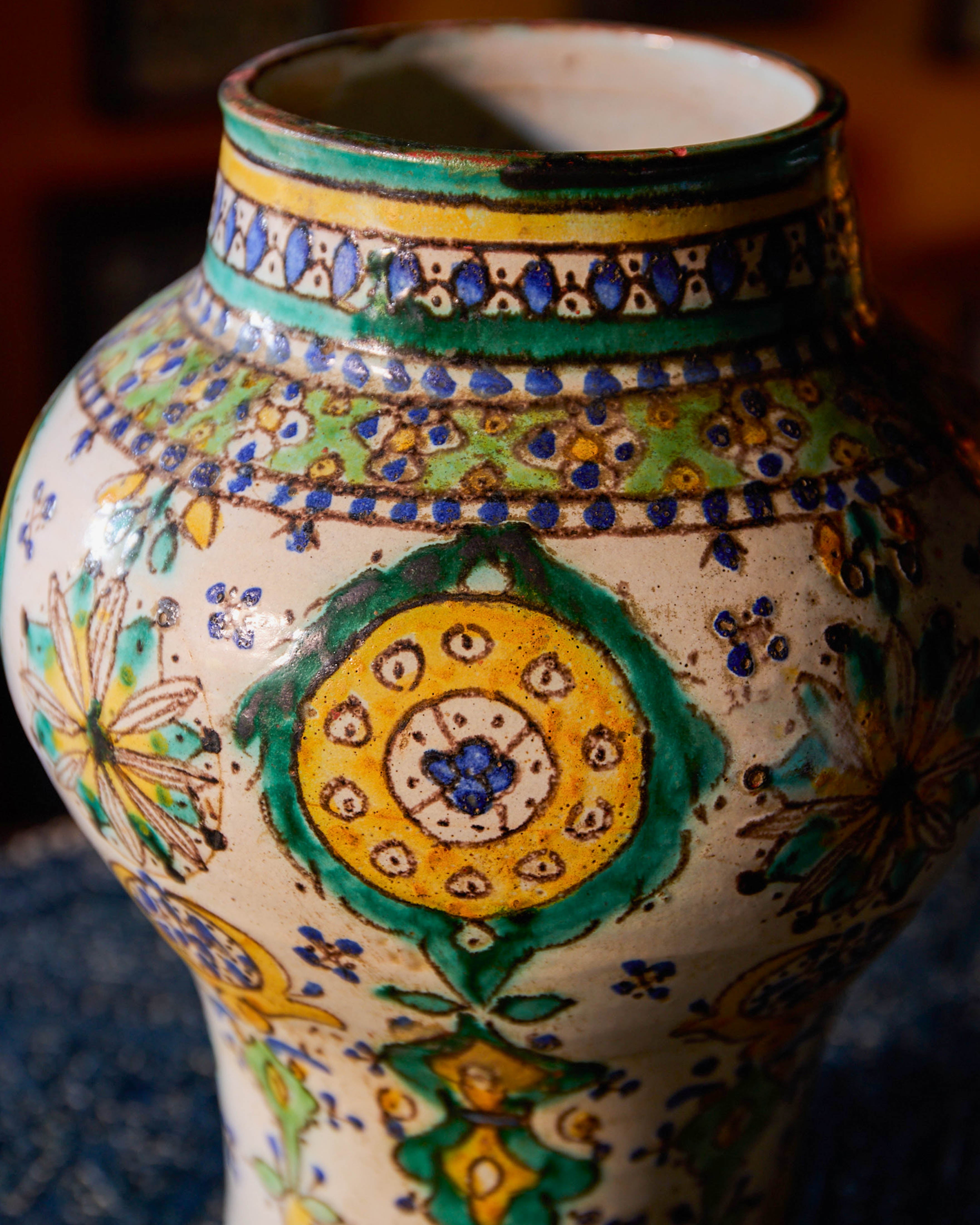
Sudpsuez A Polychrome Khabbiya Vase Morocco, Fez, 19th Century
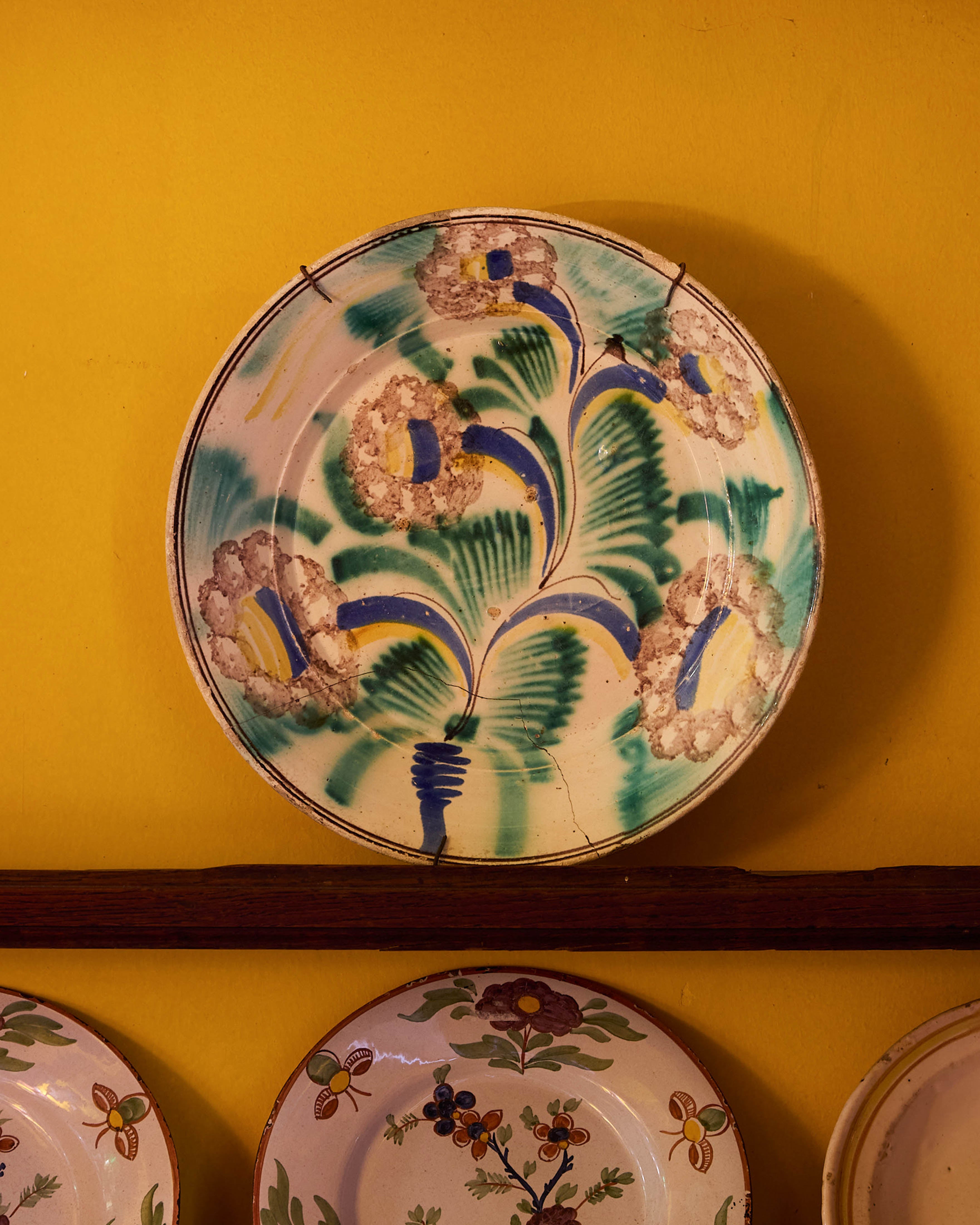
Sudpsuez A Portuguese 19th Century Charger
A striking 19th-century Portuguese charger, hand-painted with bold foliate and floral motifs in rich ochre, green, and cobalt blue. Likely produced in renowned pottery centers such as Coimbra or Caldas da Rainha, it showcases the expressive brushwork and vibrant colors characteristic of Portuguese faience. With its decorative appeal and historical significance, this charger is a superb example of Iberian ceramic artistry, making it a standout addition to any collection.
Wear and tear commiserate with the age of the item.
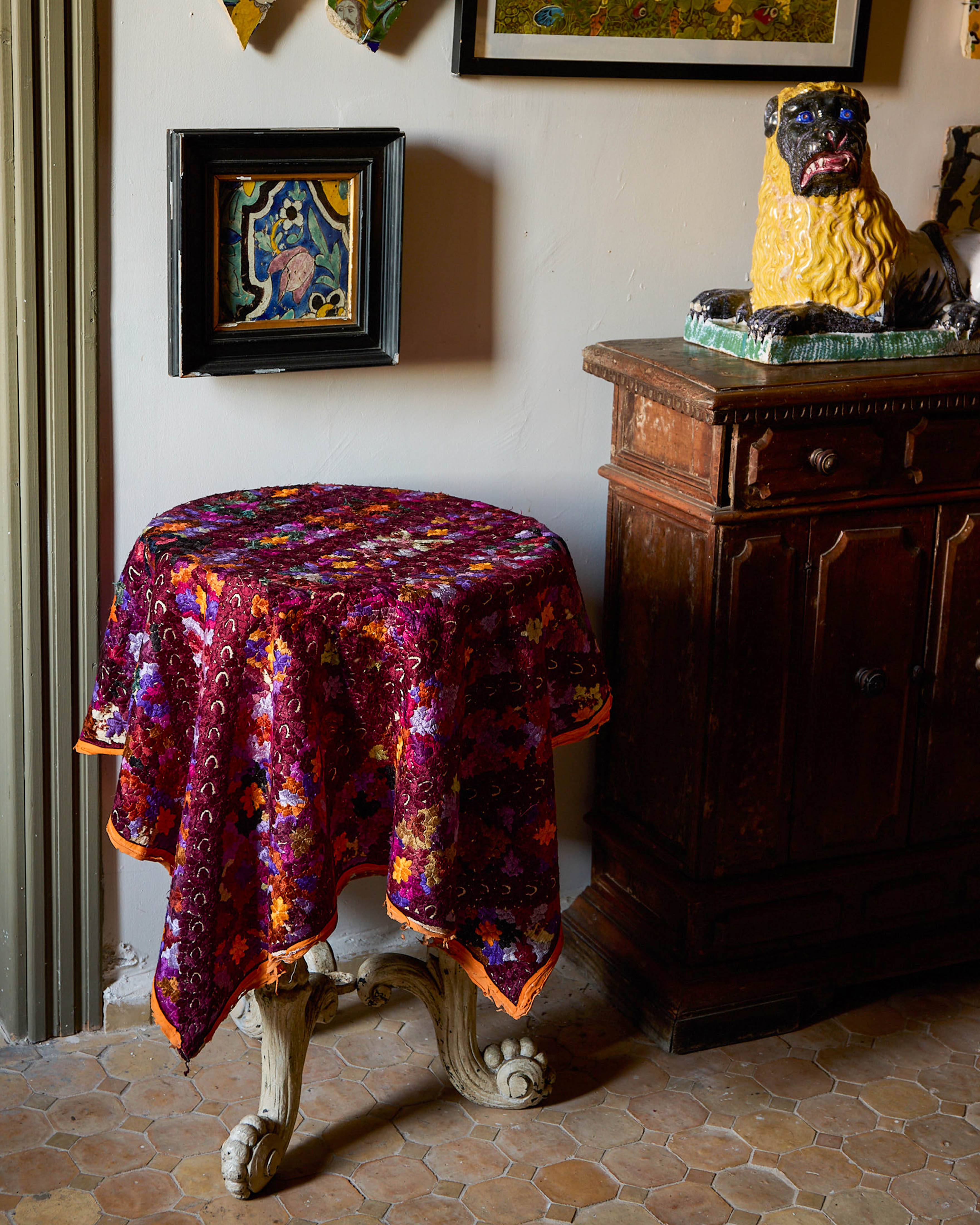
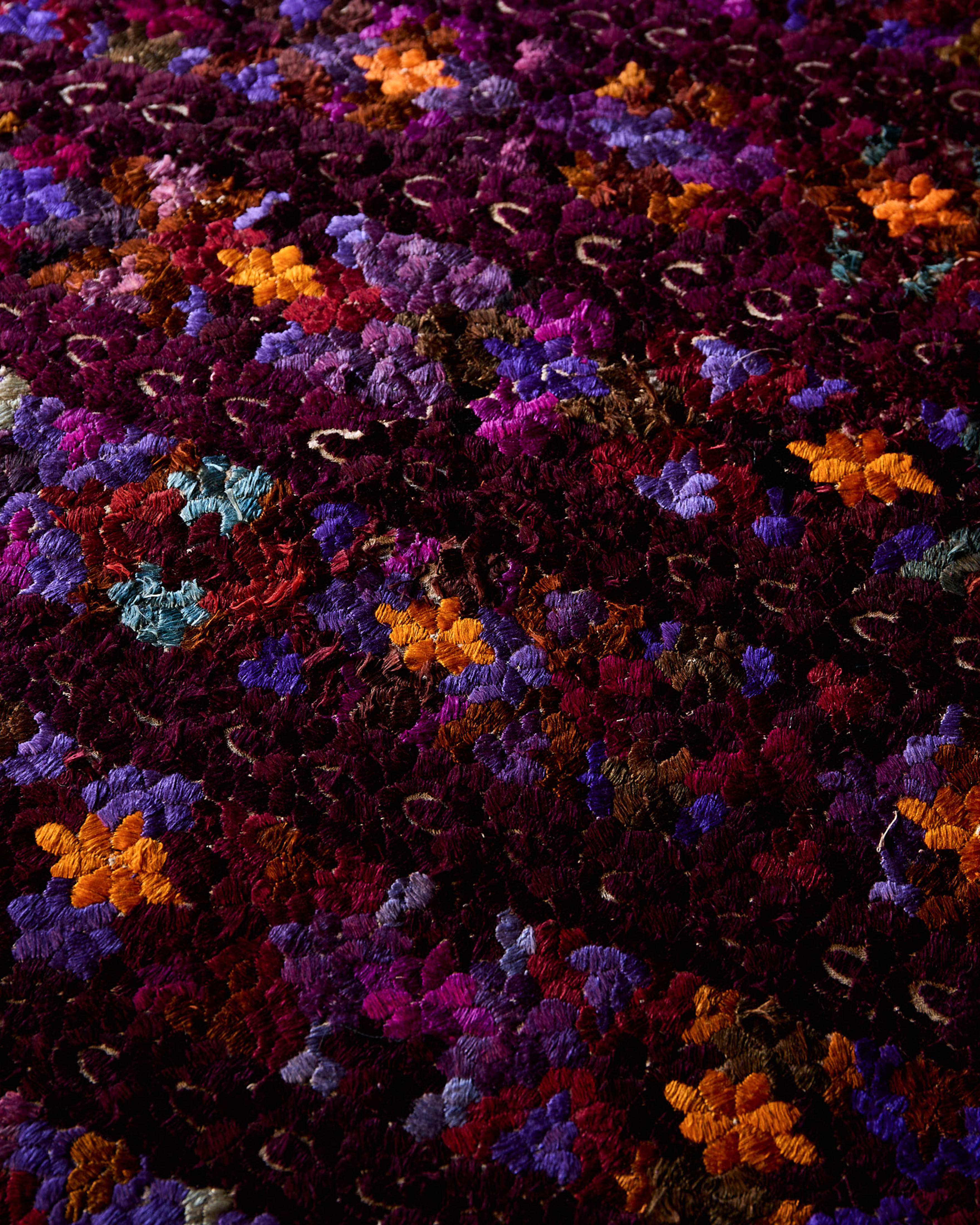
Sudpsuez A Richly Decorated Silk Panel Rabat, 19th Century
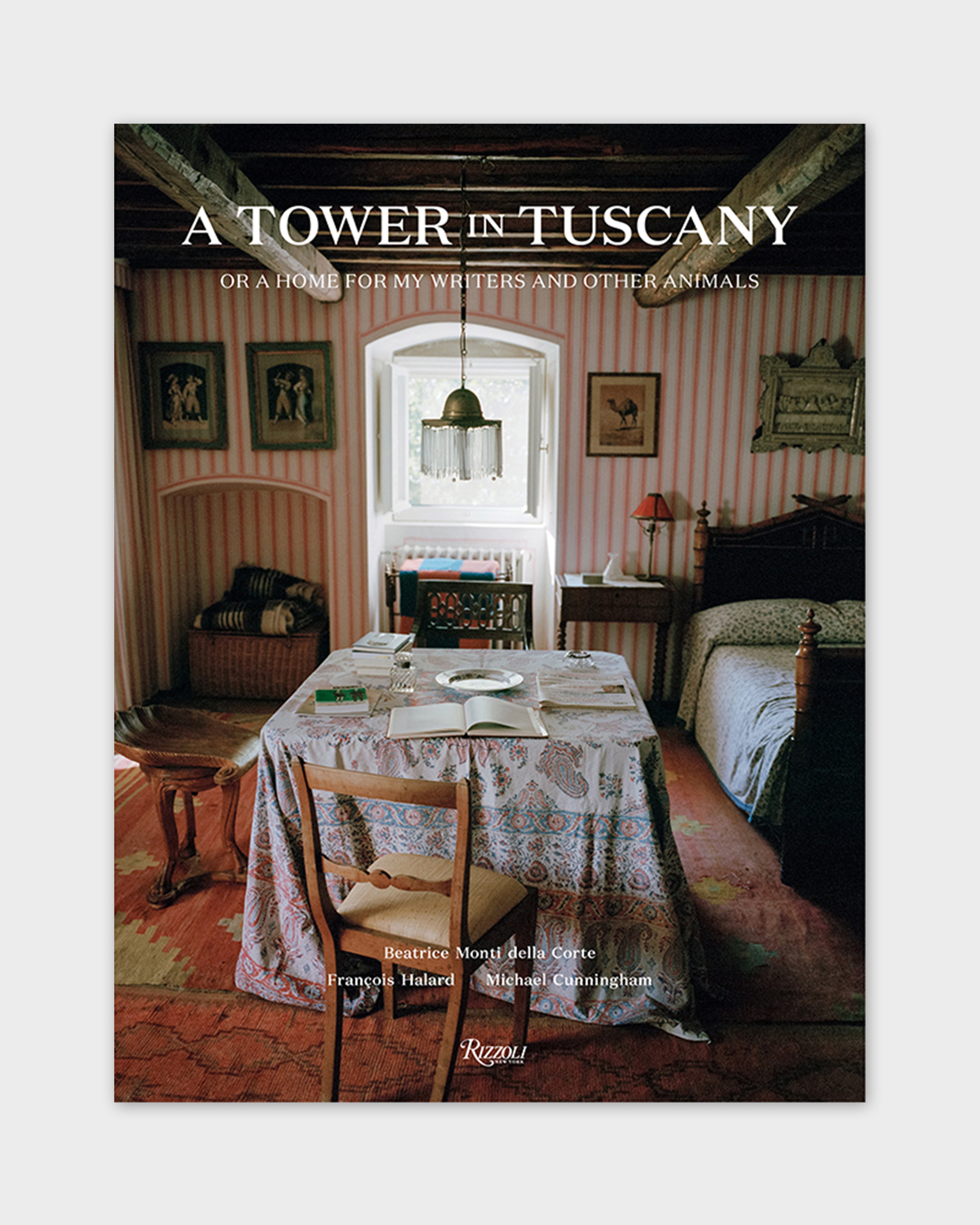
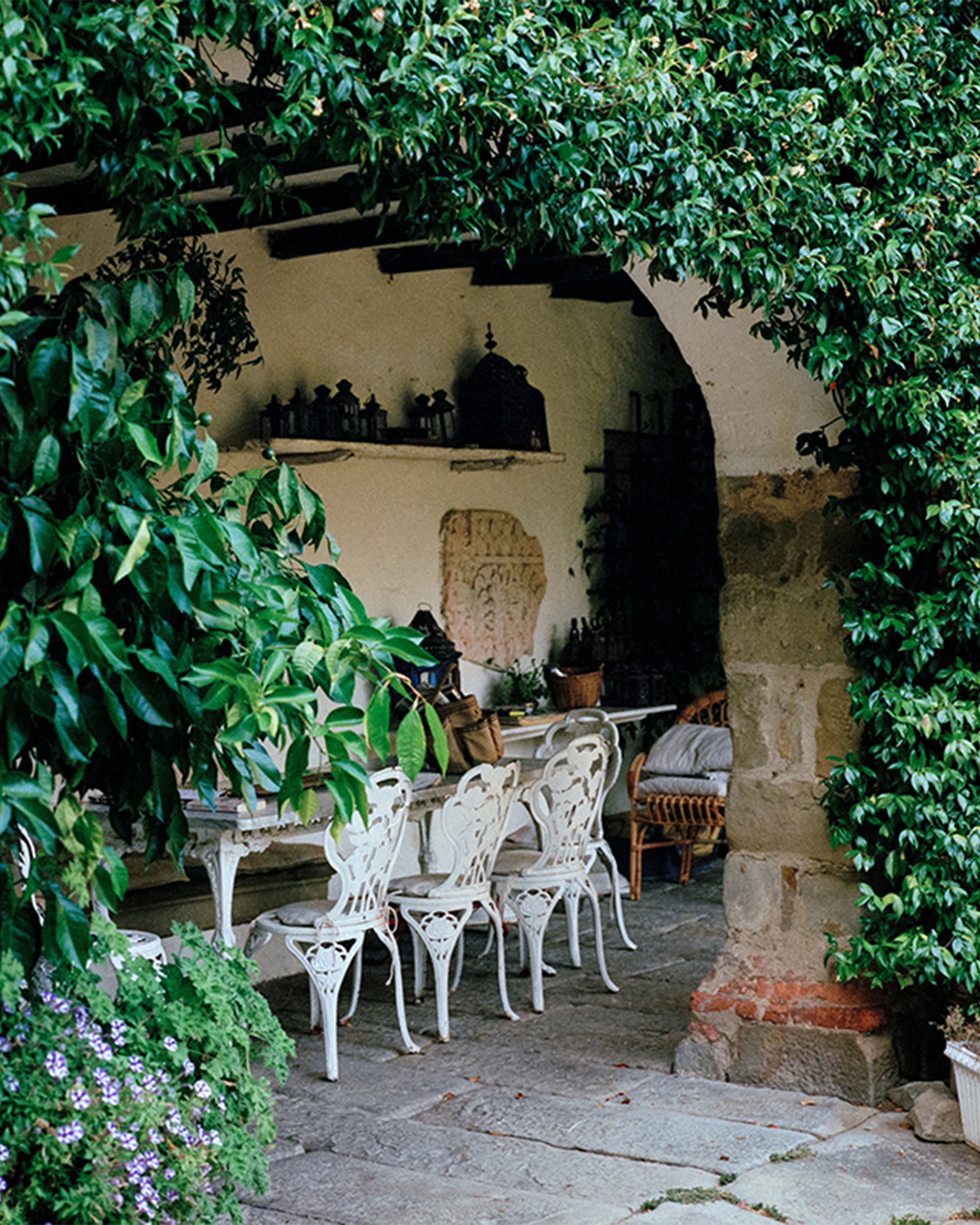
Sudpsuez A Tower in Tuscany
Edited by Beatrice Monti della Corte and Michael Cunningham
Photographs by François Halard
A glimpse inside a magical Tuscan villa--rustic yet urbane, old-world elegant yet bohemian, accessible yet personal--that nurtures the world's finest literary talents.
In the hills above Florence, Santa Maddalena is like a secret garden where writers hone their craft and meet like-minded people. Paired with evocative images, these essays by 27 acclaimed authors invite readers to understand how the spirit of this restored villa, its owners and resident pets have inspired creative writing and creativity among so many.
Monti della Corte and her late husband, Gregor von Rezzori, transformed a ruin into the ultimate retreat where they would write, garden, and entertain friends and fellow artists--Pedro Almodóvar, Bernardo Bertolucci, David Hockney, Isabella Rossellini. This gracious weaving together of hospitality and creativity became the Santa Maddalena Foundation and writers' Fellowship program in 2000.
Published by Rizzoli
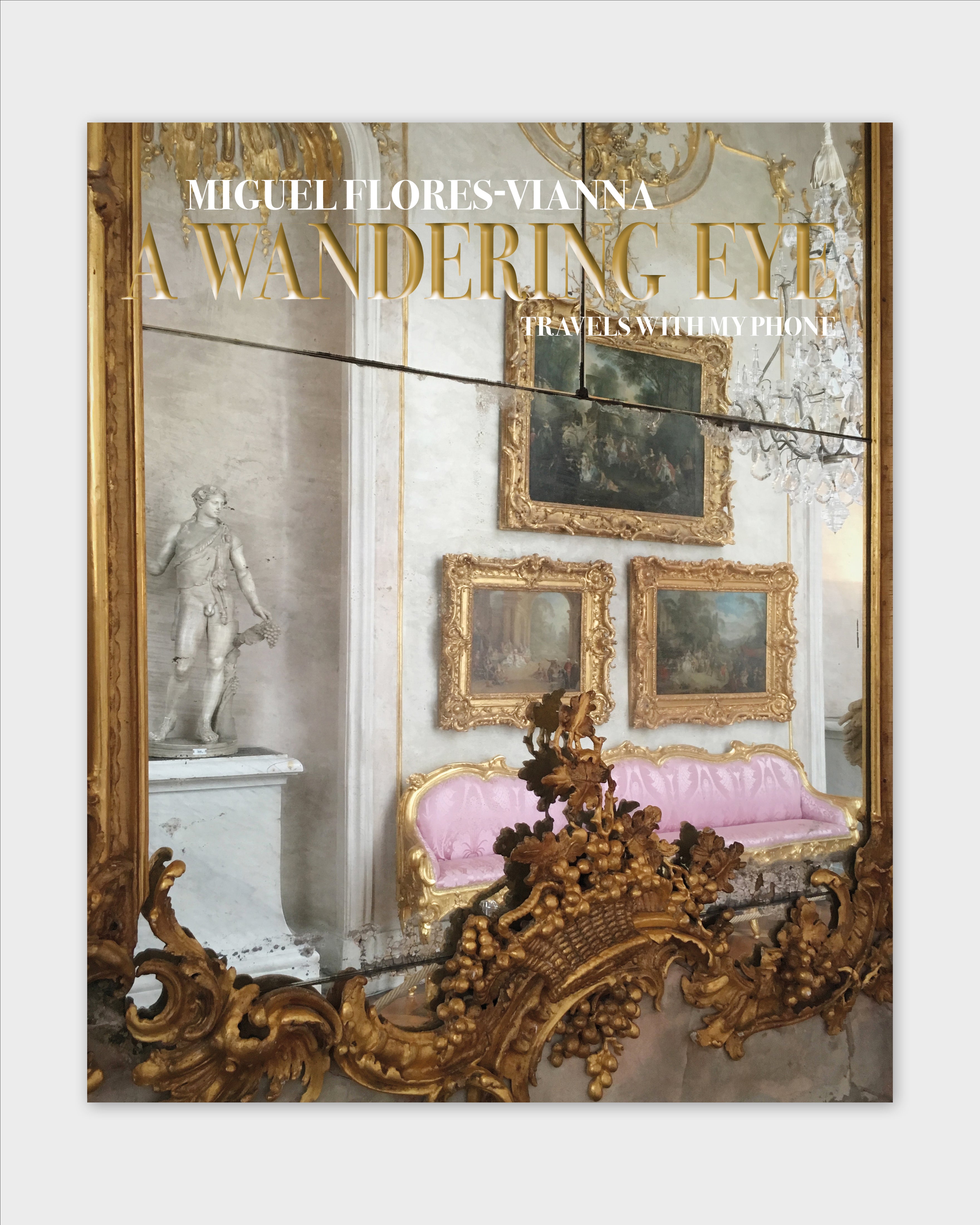
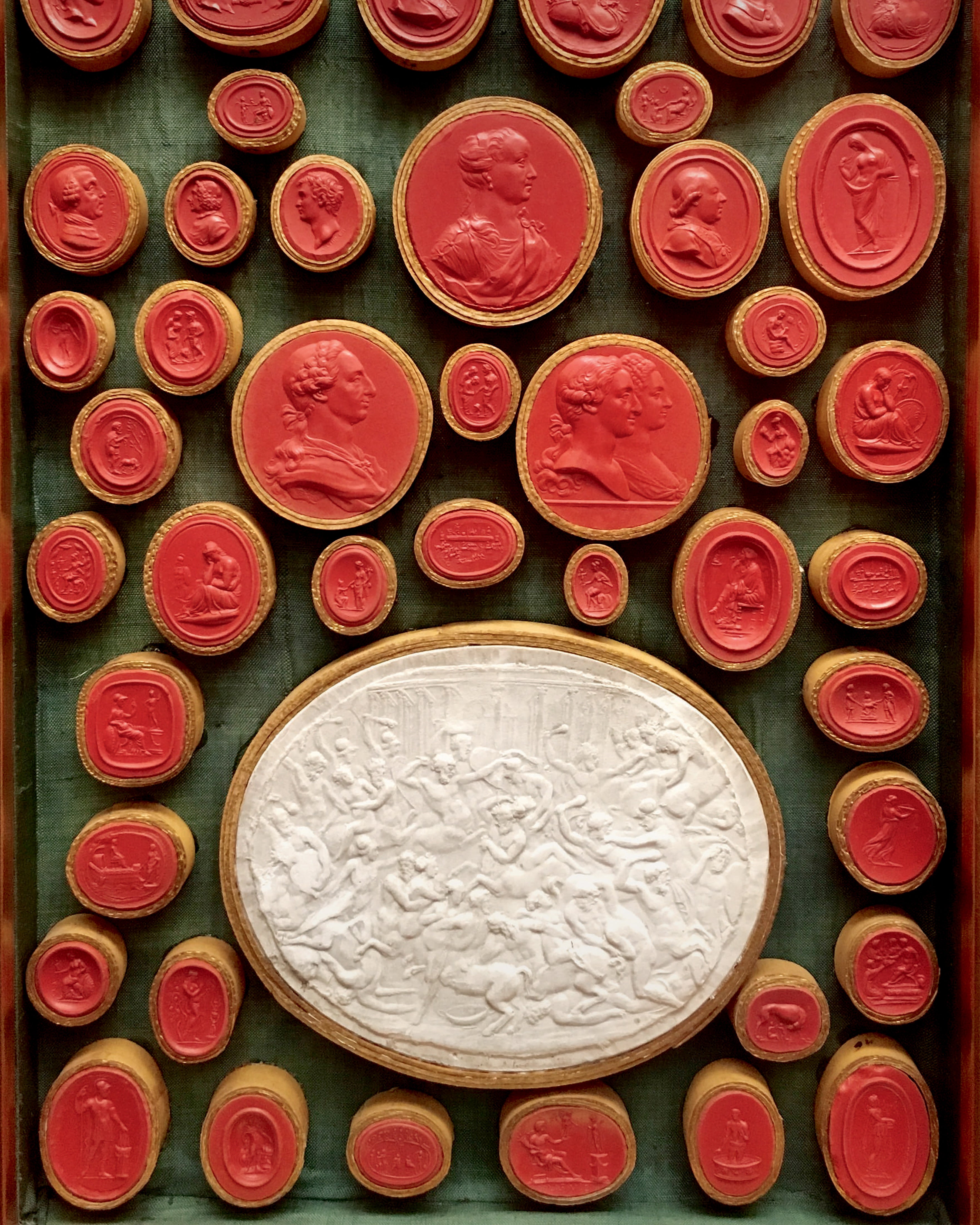
Sudpsuez A Wandering Eye: Travels with My Phone by Miguel Flores-Vianna
Published Date: 24th September 2019
Written and Photographed by Miguel Flores-Vianna
Miguel Flores-Vianna’s childhood in Argentina was marked by two constants that he believes shaped the life he chose to lead: travel and books. Perhaps because the country feels like it is located at the end of the world, most Argentines are born with a good dose of wanderlust, and Flores-Vianna had a higher dose than normal. Books helped him discover places both literally and figuratively, creating romantic visions of lands he wanted to visit, and he has gone on to document his peripatetic life with his camera, recording places as he feels they should be rather than as they are. In this irresistible volume, Flores-Vianna shares some 250 of his favorite images taken all over Europe, Africa, Asia, and the Americas—captured only with his smartphone—in the hope that viewers, seeing the world through his eyes, will learn to love these most wondrous of places as much as he does.
Published by Vendome
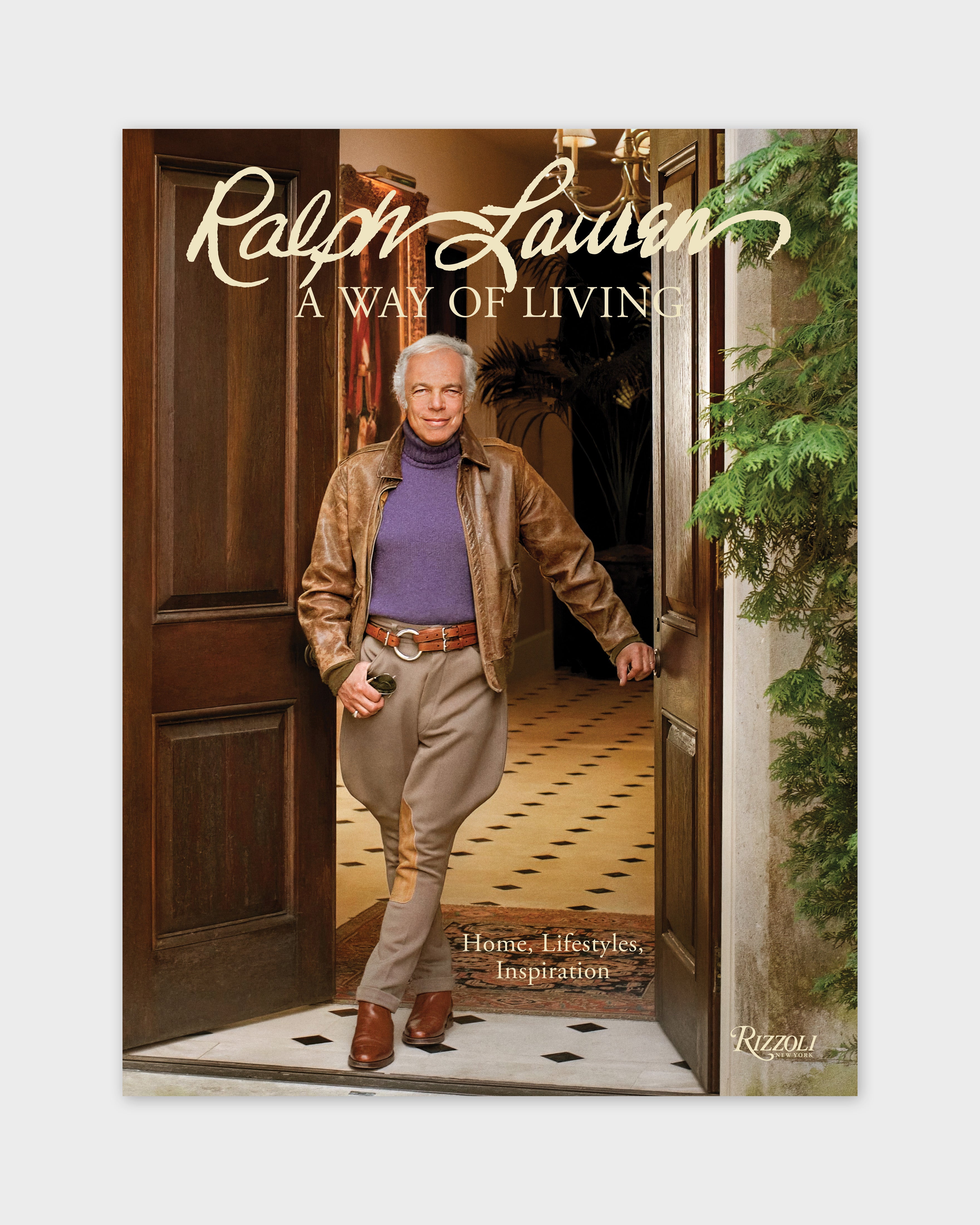
Sudpsuez A Way of Living by Ralph Lauren
Published Date: Sept 2023
Written by Ralph Lauren
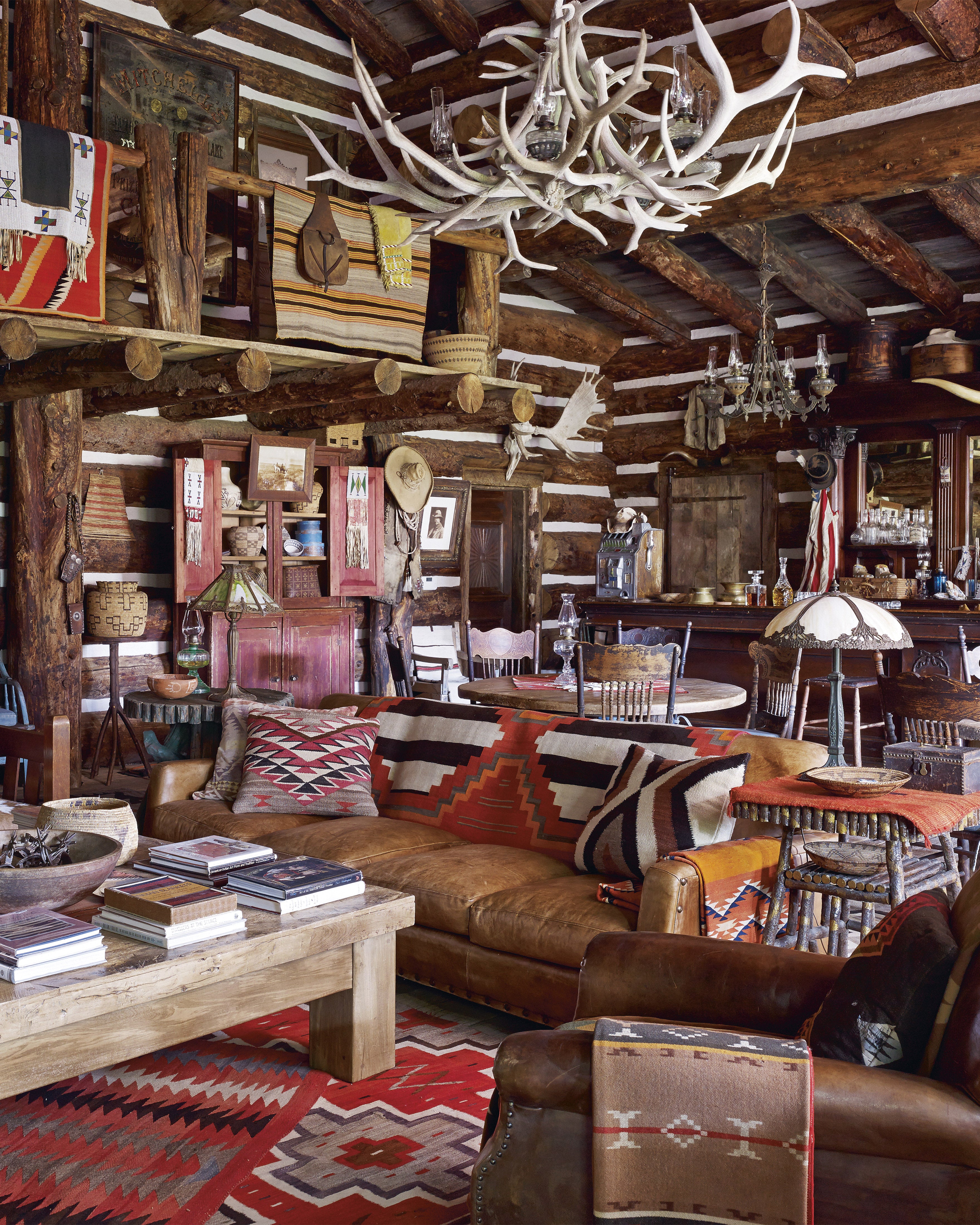
A stunning celebration of Ralph Lauren’s signature home collections—including the designer’s own homes—which have inspired the world of interior design for nearly half a century.
The cinematic vision of Ralph Lauren is brought to life with a stunning and intimately written book that spans decades of innovation and influence by the iconic American designer. Ralph Lauren: A Way of Living, published by Rizzoli New York, commemorates the 40th anniversary of the home collection with the first comprehensive volume dedicated to the signature style of Ralph Lauren and his pioneering lifestyle approach to design. From trailblazing innovations that revolutionized the home industry to conceptualizing residential retailing and perfecting the art of hospitality, Lauren has created a multifaceted world that evokes emotion and inspires a more beautiful way of life.
This special volume presents a visual timeline of Ralph Lauren’s remarkable history as a lifestyle innovator. Lauren’s unparalleled ability to seamlessly blend fashion and the home is illustrated with the groundbreaking designs and innovative use of materials that have distinguished the home collection since its inception in 1983: menswear-inspired Oxford Cloth bedding that required the creation of special looms and took two years to refine; the sleek RL-CF1 chair, crafted of carbon fiber and inspired by Lauren’s McLaren F1 racecar; and an appreciation for a timeworn, weathered aesthetic, as exemplified in the iconic Writer’s Chair with its hand-burnished leather and rich patina. Historic achievements such as the opening of his first New York City flagship on Madison Avenue – which invited guests to experience the complete World of Ralph Lauren in a residential environment – and his renowned restaurants that offer the epitome of gracious hospitality, demonstrate the magnitude of Ralph Lauren’s influence on the worlds of lifestyle design and hospitality. The timeline is complete with quotes from distinguished members of the design world and prominent figures of our culture including Oprah Winfrey, Hillary Rodham Clinton, and architecture critic Paul Goldberger.
Ralph Lauren: A Way of Living honors the life and work of a true visionary and innovator. Ralph Lauren’s monumental impact on the way we live is as recognizable today as it was groundbreaking 40 years ago. His vision is not about trends of the moment, but is built upon values and things that last, and his legacy will continue to shape the places we call home.
Cover photo by Richard Corman.
Published by Rizzoli
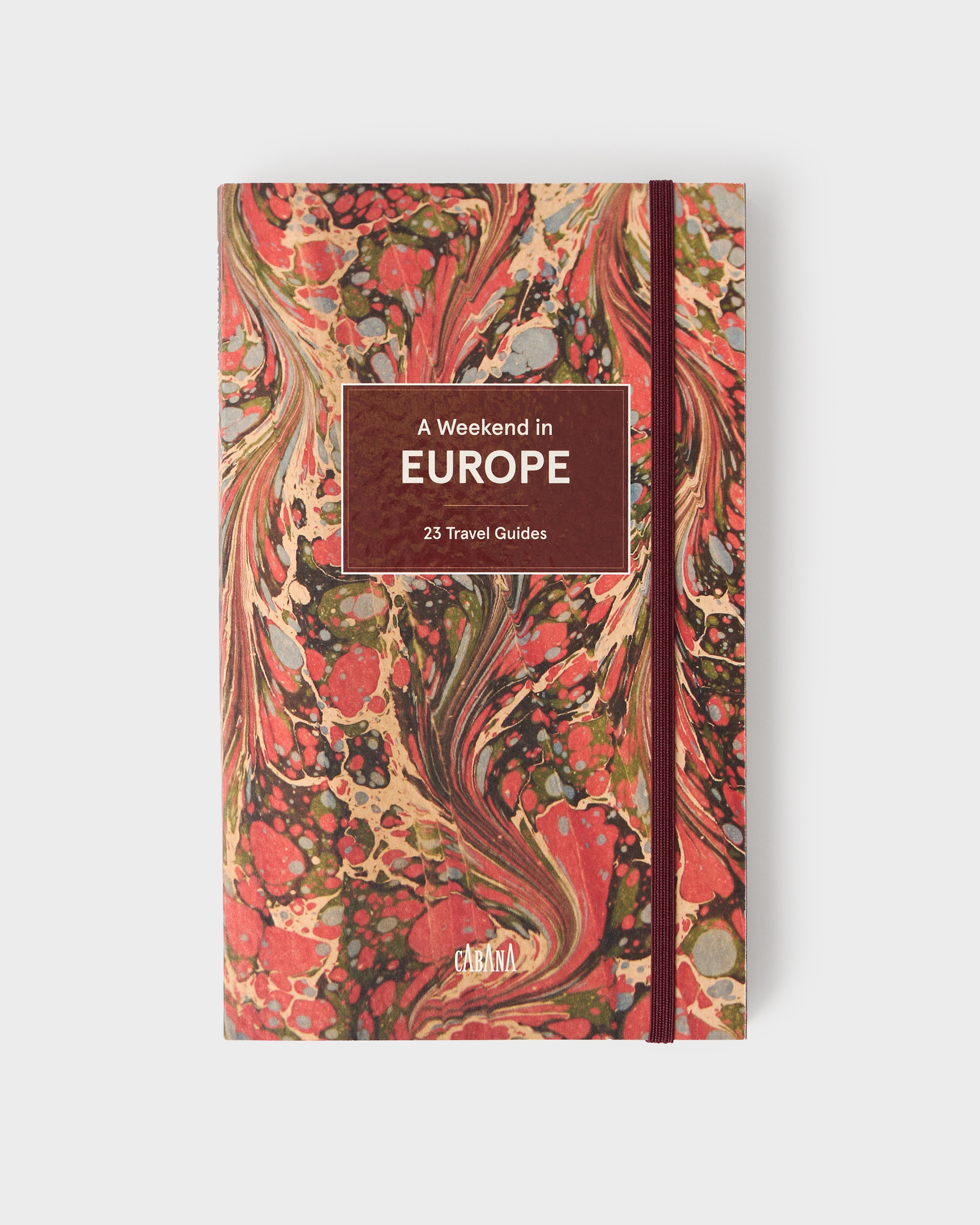
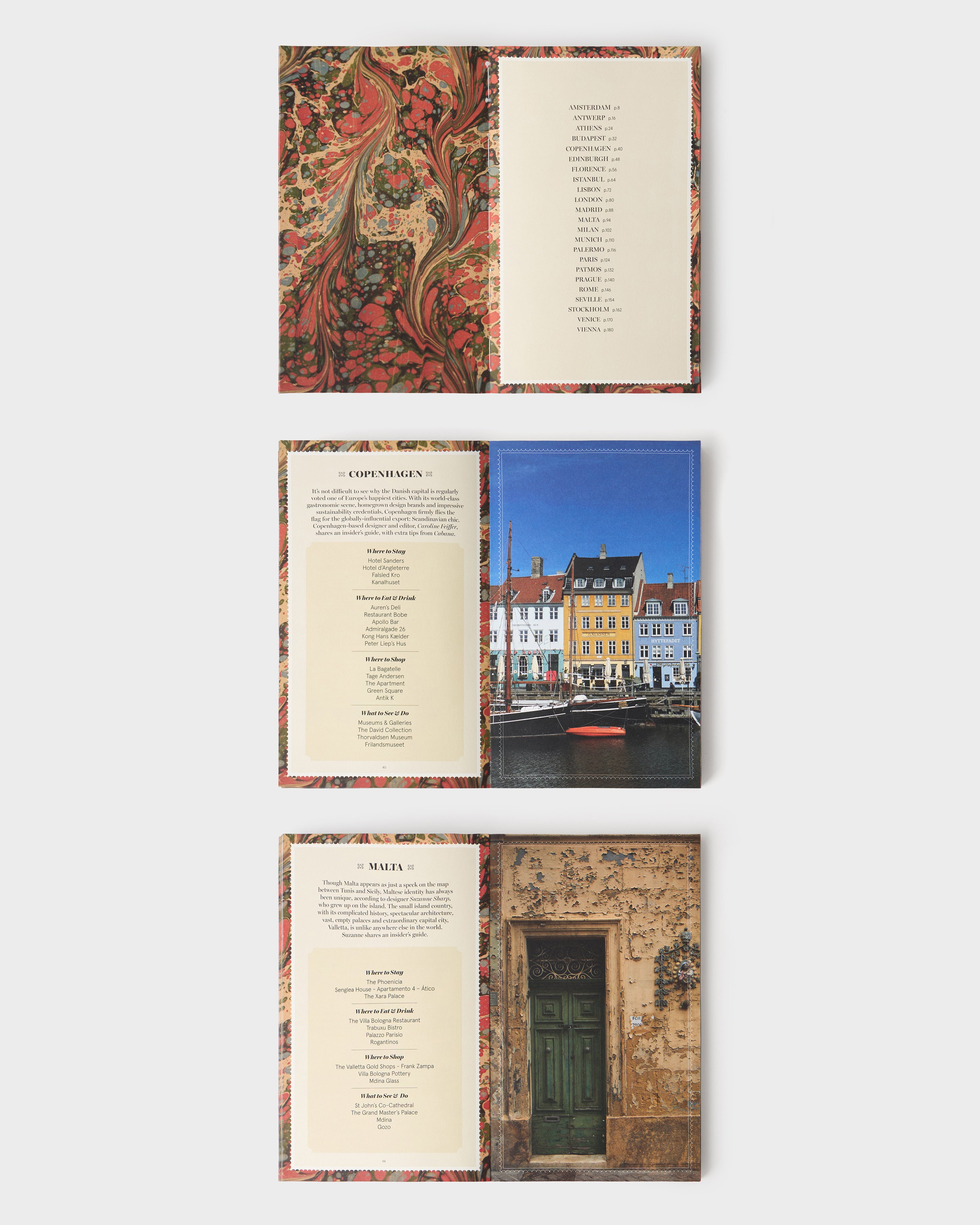
Sudpsuez A Weekend in Europe: 23 Travel Guides by Editors
Travel is, and always has been, integral to the ethos. We firmly believe that even a weekend in another’s reality can lead to a whole roundabout of possibilities. With this beautifully packaged portable companion you will have at your fingertips 23 travel guides, each covering Cabana’s top tips, secret addresses and best recommendations for a culturally enriching weekend in one of our favorite European destinations. From Martina Mondadori’s favorite shops in London, Milan and Budapest to Miguel Flores-Vianna’s must-visit bazaars in Istanbul, Laura Kugel’s favorite museums in Paris and Soledad Twombly’s top restaurants in Rome, you will discover carefully curated insider guides - to ensure you never miss a city’s ‘best bits’ or lesser-known treasures. Travel the way and you’ll always have an inspiring experience and a story to share.
Destinations Featured: Amsterdam, Antwerp, Athens, Budapest, Copenhagen, Edinburgh, Florence, Istanbul, Lisbon, London, Madrid, Malta, Milan, Munich, Palermo, Paris, Patmos, Prague, Rome, Seville, Stockholm, Venice and Vienna
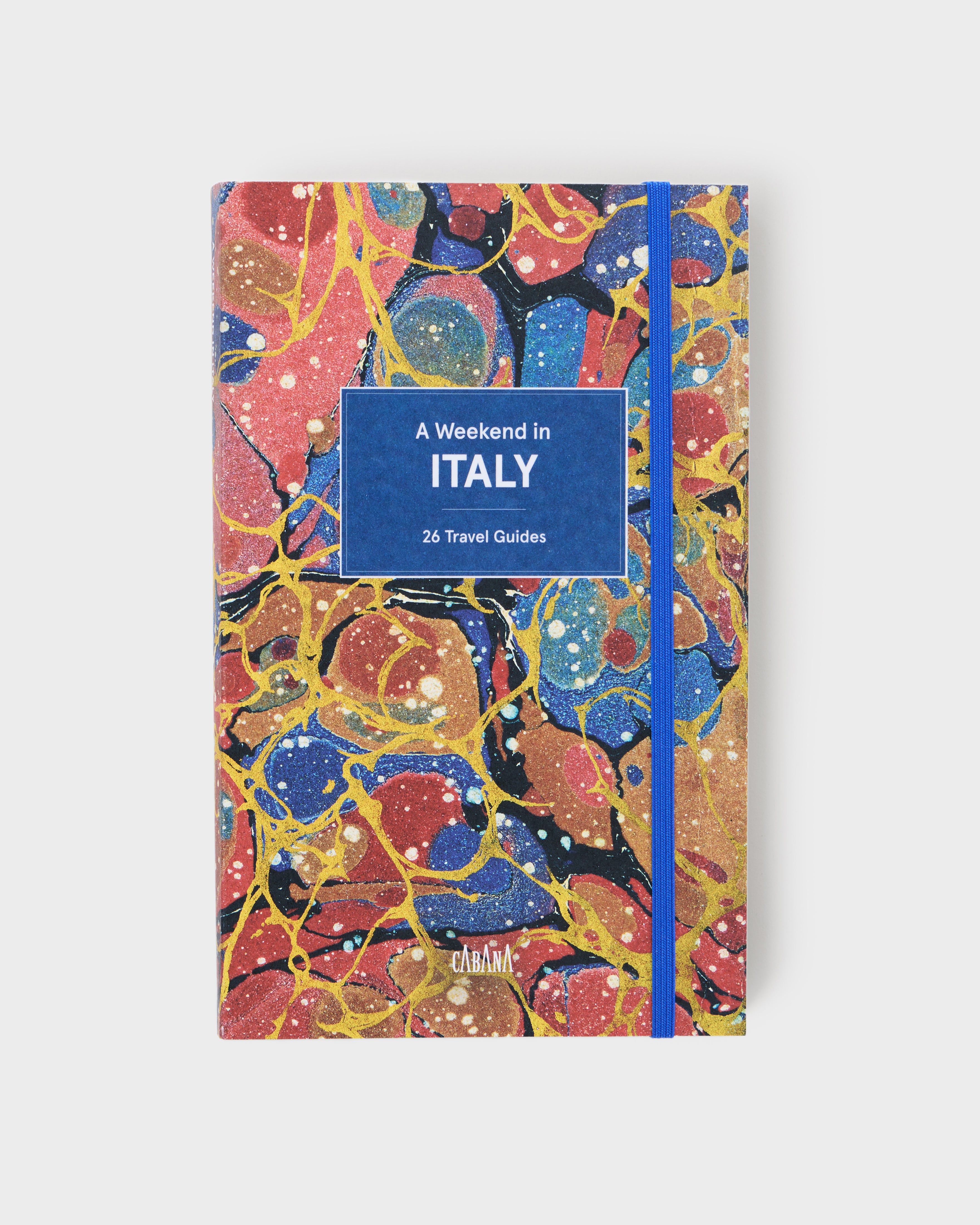
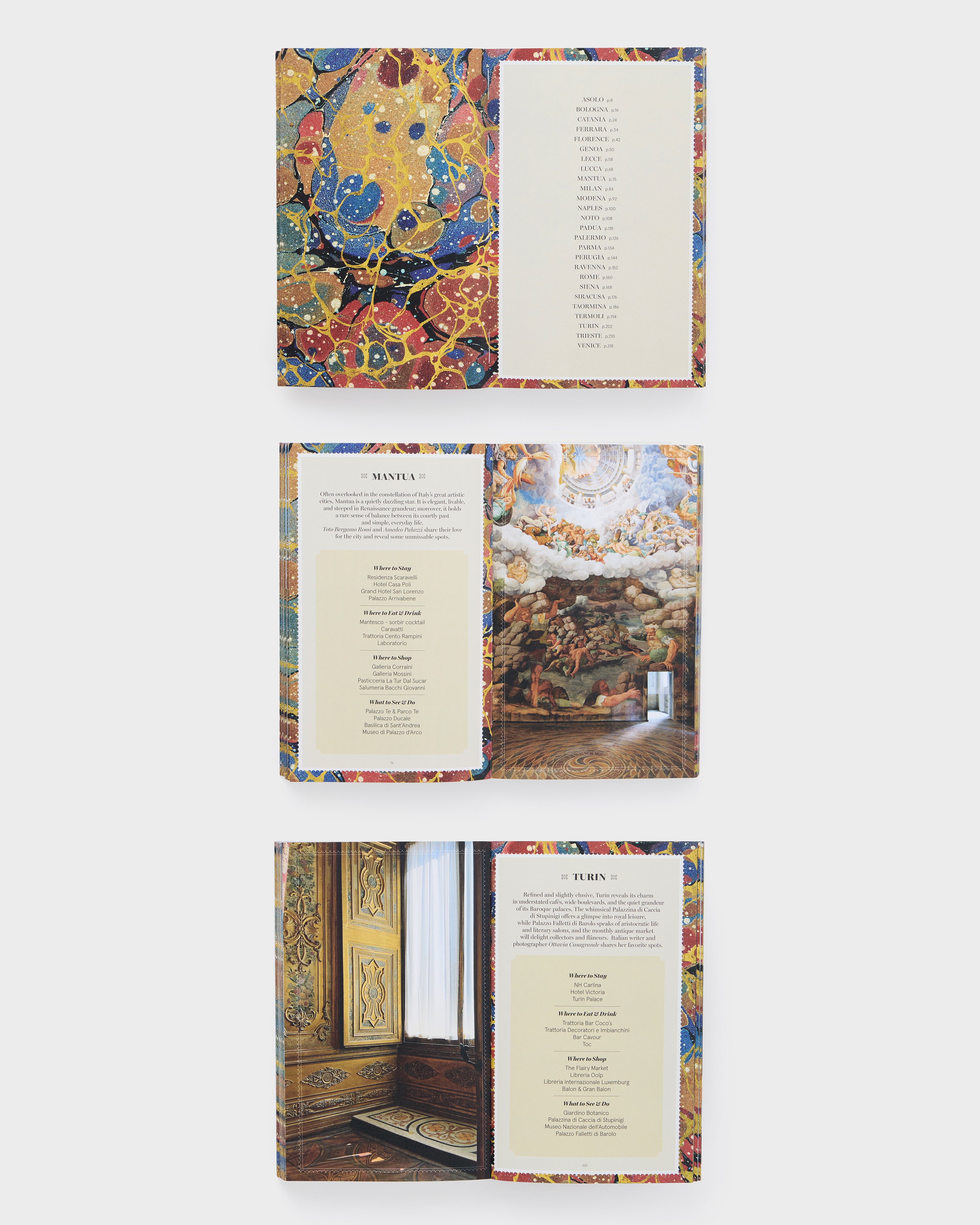
Sudpsuez A Weekend in Italy
From family trattorias where recipes pass through generations to hidden Renaissance gardens, in Italy authentic experiences are born from local whispers, not tourist maps. Thoughtfully curated by the Family, our city guide unlocks the most enchanting corners of the Italian peninsula.
Destinations Featured: Asolo, Bologna, Catania, Ferrara, Florence, Genoa, Lecce, Lucca, Mantua, Milan, Modena, Napoli, Noto, Padova, Palermo, Parma, Perugia, Ravenna, Rome, Siena, Siracusa, Taormina, Termoli, Turin, Trieste, and Venice.
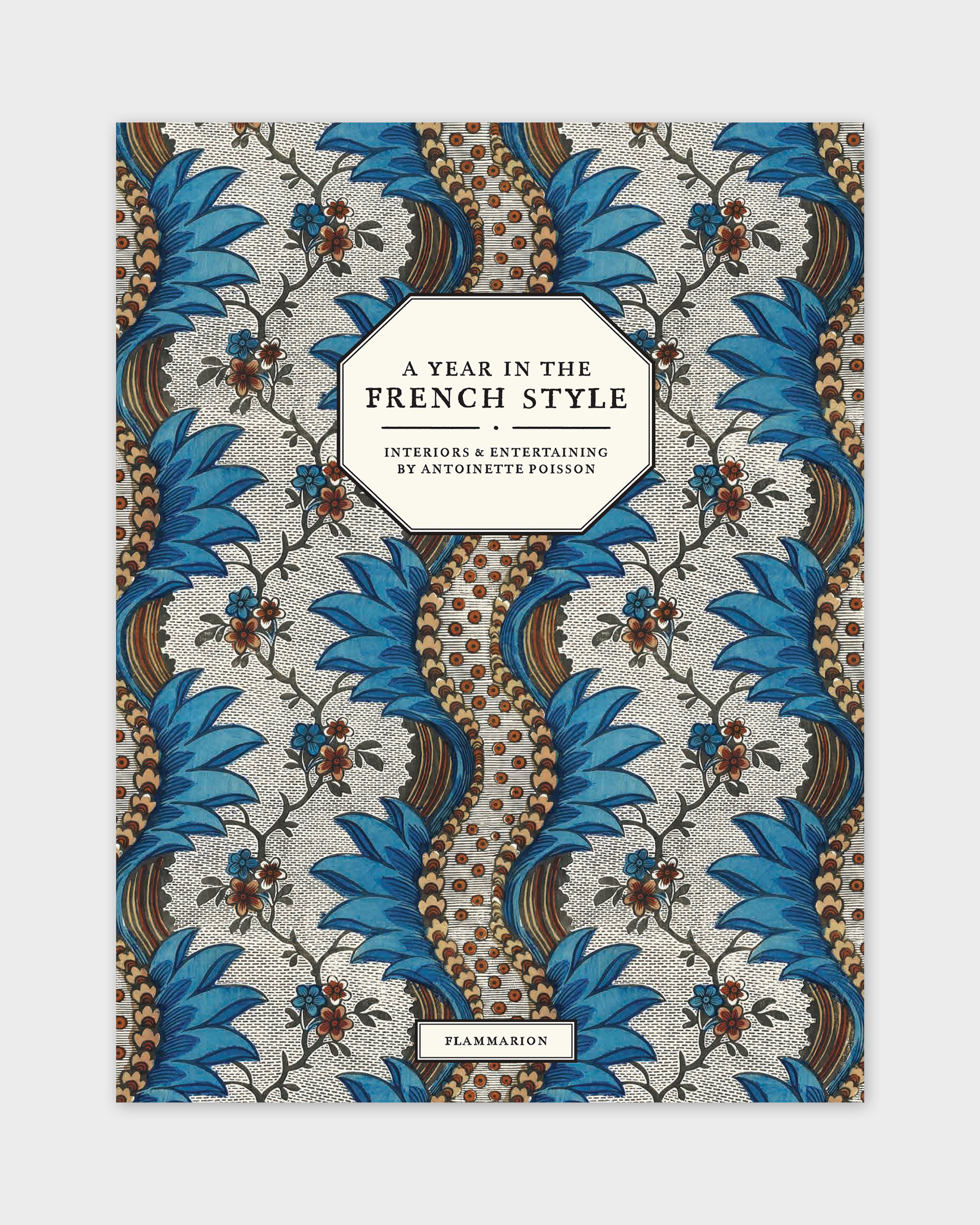
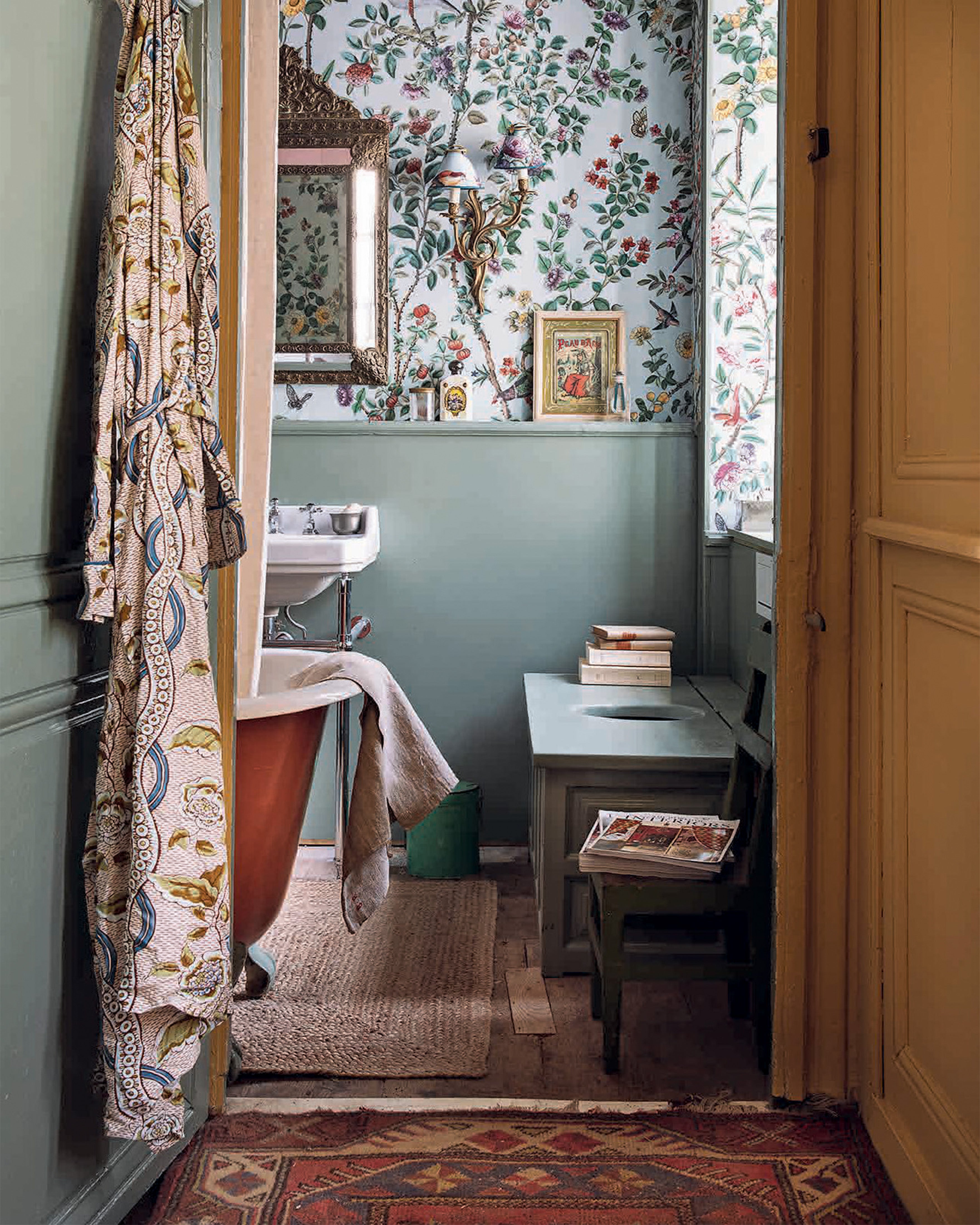
Sudpsuez A Year in the French Style, Interiors and Entertaining by Vincent Farelly
Written by Vincent Farelly and Jean-Baptiste Martin
Foreword by John Derian
Photographs by Ruth Ribeaucourt
The founders of Antoinette Poisson take readers inside their historic townhouse on the Atlantic coast to discover a style and art of entertaining rooted in French tradition and elegance.
Maison Lescop—the historic residence of an eighteenth-century French importer for the Indian trading company in Port-Louis, Brittany—seemed predestined to become the new home and restoration project for the creative duo behind Antoinette Poisson, a Parisian design team dedicated to reviving the savoir faire of domino paper for home decoration and furnishings. The art historians became enchanted by the poetic beauty of this artisanal craft—derived from an Indian block print technique—when they uncovered original hand-painted eighteenth-century domino wallpaper while restoring a mansion in central France.
Enchanted by the repeat-pattern domino prints, which range from florals and fauna to geometric and ikat, they have appointed their new home with the charming decorative touches that are their signature—handmade lampshades, wallpaper lined armoires, paper-mâché marriage boxes, assorted table settings, and luxurious textiles.
Celebrating the rhythm of life in France, they bring readers on adventures—shopping at the local market, antiquing, mushroom hunting, sheep’s cheese making, paper making, and textile dying—and share classic seasonal French meals inspired by antique cookbooks, served-up on hand-dyed indigo tablecloths or on nautical striped throws for a seaside picnic. They also include creative insight from their style icon friends, like American decoupage artist John Derian and French musician Clara Luciani.
Published by Flammarion
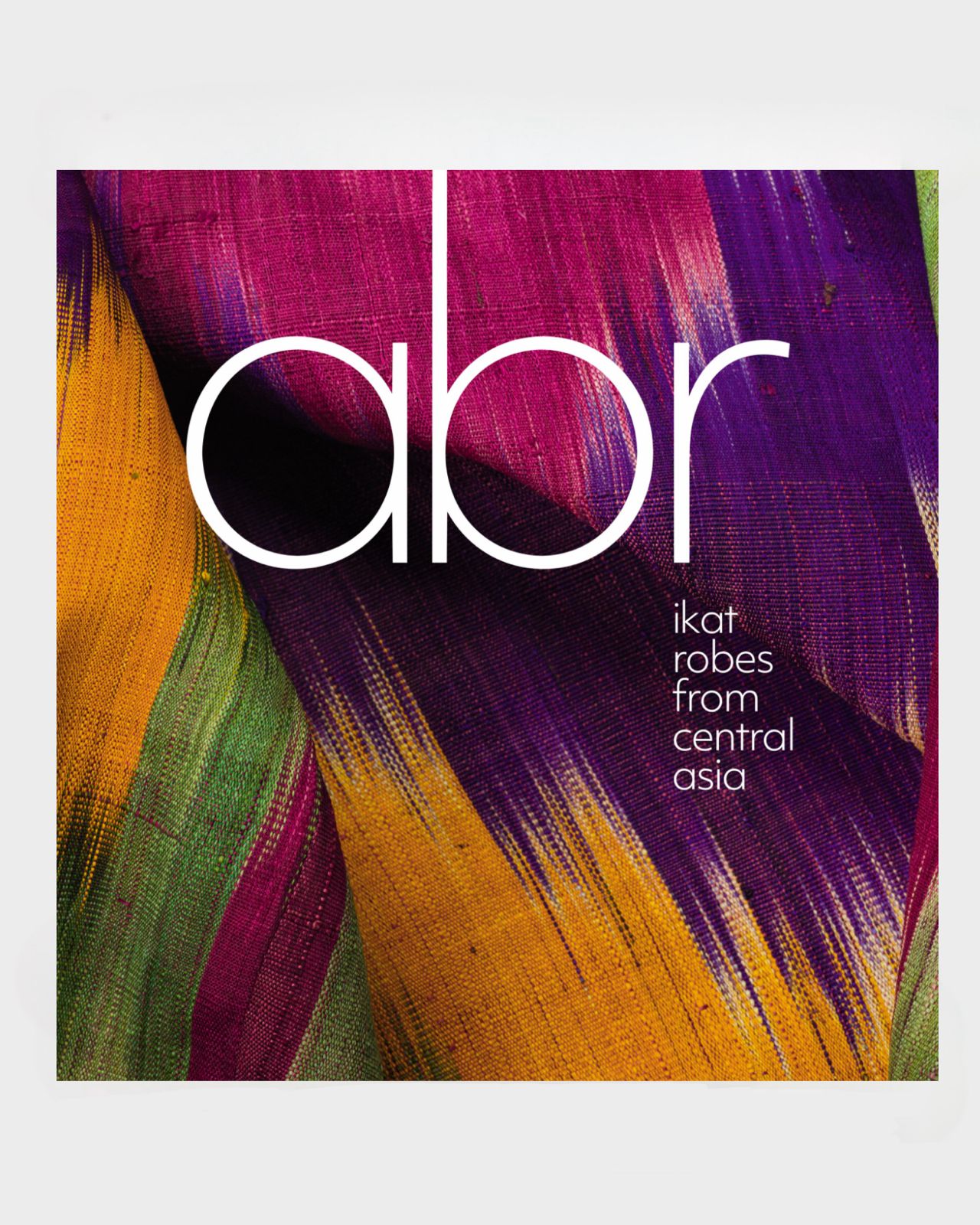
Sudpsuez Abr, Ikat Robes from Central Asia
Words by Elena Tsareva
Ikat textiles, known as abr in their lands of origin in Central Asia, are beloved by collectors, decorators and textile devotees across the world. This book presents a new approach to the intricately patterned silk textiles by focusing on complete robes from a major private collection. These items of clothing tell stories about their wearers: their home, identity and place in society. By studying the history, making, and changing fashions of ikat robes, the past is brought to life. It quickly becomes clear that the power and influence of Central Asian costume reached far beyond the borders of modern Uzbekistan, inspiring imitations and providing visual stimuli for avant-garde artists.
With stunning photography and previously unpublished research findings, this publication is a new take on ikat costume for those interested in the history of textiles and fashion, but also for those wishing to admire the sheer beauty and exquisite craftsmanship of these remarkable textiles.
Published by Hali Publications Ltd